
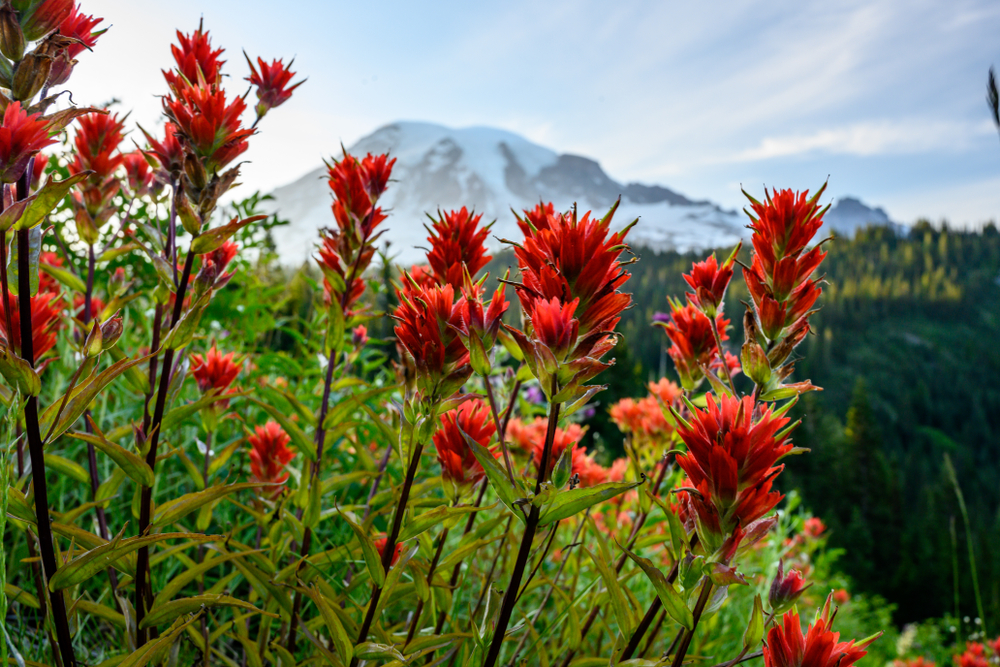
If you have ever traveled through the mountain meadows and open plains of Wyoming, you may have noticed bright red wildflowers covering the landscape during late spring and summer. These vibrant blooms are Indian paintbrushes, the official Wyoming state flower and one of the most recognizable wildflowers in the American West.
Known for their fiery red, orange, and pink tones, Indian paintbrush flowers add bold color to Wyoming’s rugged scenery. The flower represents the state’s natural beauty, resilience, and connection to the Rocky Mountain region. Whether you are searching for the answer to what is the state flower of Wyoming? Or looking to learn more about this iconic bloom, here is everything you need to know about Wyoming’s beloved wildflower.
For more floral inspiration across the United States, browse our full list of state flowers.
History of the Wyoming State Flower
The Wyoming state flower is the Indian paintbrush, scientifically known as Castilleja linariifolia. This striking wildflower belongs to the broomrape family and grows naturally across much of the western United States, especially in high-elevation regions. Indian paintbrush thrives throughout Wyoming’s mountains, foothills, grasslands, and open forests. The flower stands out because of its colorful bracts, which are specialized leaves that resemble brushstrokes of paint. While many people think the red portions are petals, the true flowers are the smaller greenish-yellow blooms hidden inside the colorful bracts.
The flower earned recognition for its beauty long before becoming an official symbol. Native American tribes throughout the Rocky Mountain region valued Indian paintbrush for ceremonial uses and natural dyes. According to folklore, the flower received its name from a legend about an artist who left paintbrushes filled with paint across the landscape, creating fields of vivid color. The Wyoming Legislature officially designated Indian paintbrush as the state flower of Wyoming in 1917. The decision reflected the flower’s widespread presence across the state and its strong connection to Wyoming’s natural environment. Today, the bloom continues to symbolize the rugged beauty and untamed spirit of the state.
According to the Wyoming Secretary of State, the Indian paintbrush remains one of the state’s most important official symbols.
When and Why the Indian Paintbrush Was Chosen as the Wyoming’s Flower
Wyoming selected the Indian paintbrush as its official flower because of its strong association with the state’s landscape. By the early 1900s, many states were choosing official flowers to celebrate regional identity and natural heritage. Wyoming residents wanted a flower that reflected the state’s wild and rugged terrain.
At the time, several flowers were considered, including columbines and pasque flowers. Indian paintbrush eventually won public support because it grows abundantly across Wyoming and produces dramatic displays of color in alpine meadows and mountain valleys. The flower’s durability also played a role in its selection. Indian paintbrush survives in challenging conditions, including rocky soils, dry climates, and high elevations. Those traits aligned closely with Wyoming’s frontier history and resilient culture.
The Wyoming state flower continues to appear in educational materials, tourism campaigns, and nature guides across the state. During summer wildflower season, visitors traveling through areas near Grand Teton National Park and Yellowstone National Park often spot vibrant fields of Indian paintbrush growing alongside lupines, daisies, and sagebrush. If you enjoy learning about western wildflowers, you may also want to learn about the Utah state flower and its connection to the American West.
Fun Facts About the Indian Paintbrush
The Indian paintbrush is one of the most unique native wildflowers in North America. Here are some interesting facts about Wyoming’s official bloom:
The Bright Colors Are Not Petals
The colorful red, orange, or pink parts of the plant are modified leaves called bracts. The true flowers remain hidden within the colorful spikes.
Indian Paintbrush Comes in Multiple Colors
Although red is the most common color associated with the Wyoming state flower, Indian paintbrush varieties also bloom in orange, yellow, pink, and even cream shades depending on the species and growing conditions.
It Is a Semi-Parasitic Plant
Indian paintbrush has a fascinating survival strategy. The plant attaches its roots to nearby grasses and wildflowers to absorb nutrients and water. This adaptation helps the flower survive in nutrient-poor mountain soils.
The Flower Attracts Pollinators
Hummingbirds, butterflies, and native bees are drawn to the flower’s bright colors and nectar-rich blooms. In many western ecosystems, Indian paintbrush plays an important role in supporting pollinator populations.
There Are More Than 200 Species
The Castilleja genus includes over 200 species across North America. Wyoming’s official species, Castilleja linariifolia, is especially common throughout the Rocky Mountain region.
For additional scientific information about Indian paintbrush species, visit Lady Bird Johnson Wildflower Center.
Growing and Caring for Indian Paintbrush
Indian paintbrush is beautiful in natural landscapes, though it can be difficult to grow in home gardens because of its semi-parasitic nature. Gardeners who want to grow this flower successfully need to recreate its natural habitat as closely as possible.
Soil Requirements
Indian paintbrush prefers well-draining soil with low to moderate fertility. Rocky or sandy soils often work best because the plant naturally grows in mountain meadows and dry grasslands.
Sunlight Needs
The flower thrives in full sun. Most varieties need at least six hours of direct sunlight each day for healthy growth and vibrant color.
Water Requirements
Once established, Indian paintbrush tolerates drought conditions well. Overwatering may damage the roots or lead to fungal issues. Moderate watering during establishment works best.
USDA Growing Zones
Most Indian paintbrush varieties grow well in USDA hardiness zones 3 through 9, depending on elevation and regional climate.
Companion Plants
Because Indian paintbrush relies on neighboring plants for nutrients, gardeners often pair it with native grasses, penstemons, or lupines. These companion plants help support healthy root development.
Learn More About State Flowers with The Bouqs Co.
Wildflower gardens featuring Indian paintbrush create colorful, pollinator-friendly landscapes that reflect the beauty of the American West. If you want to celebrate Wyoming’s natural beauty year-round, fresh blooms and seasonal arrangements from our flower delivery collection bring nature-inspired color directly to your home.
Shop All

