
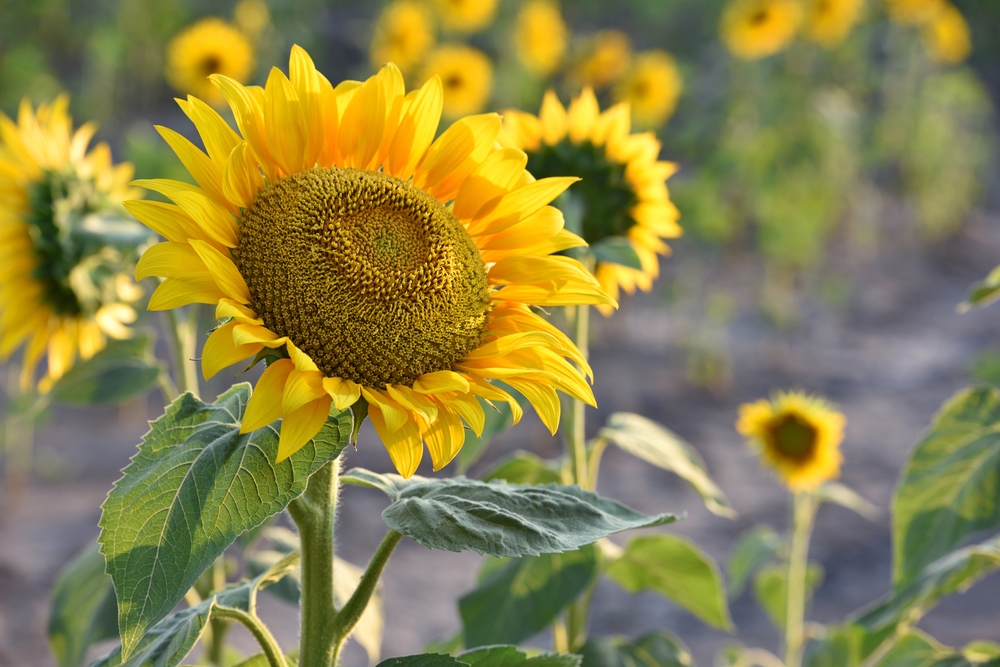
There’s something genuinely thrilling about a flower that commands attention. Not a delicate sprig tucked into a border, but a bloom so oversized it makes you stop mid-stride and wonder how something grew that large. If you’ve ever asked yourself, “What are the biggest flowers you can actually grow in a backyard garden?” Then, this list is for you.
From dinner plate-sized dahlias to towering sunflowers and fragrant peonies with flowers wider than your hand, plants with big flowers have a way of transforming an ordinary garden into something spectacular. They anchor beds, draw pollinators, and make bouquets that leave an impression. And if you don’t have a garden? You can always order flowers online and bring that same drama indoors.
Here are 15 of the best plants with big flowers worth growing or gifting this season.
1. Dinner Plate Dahlia
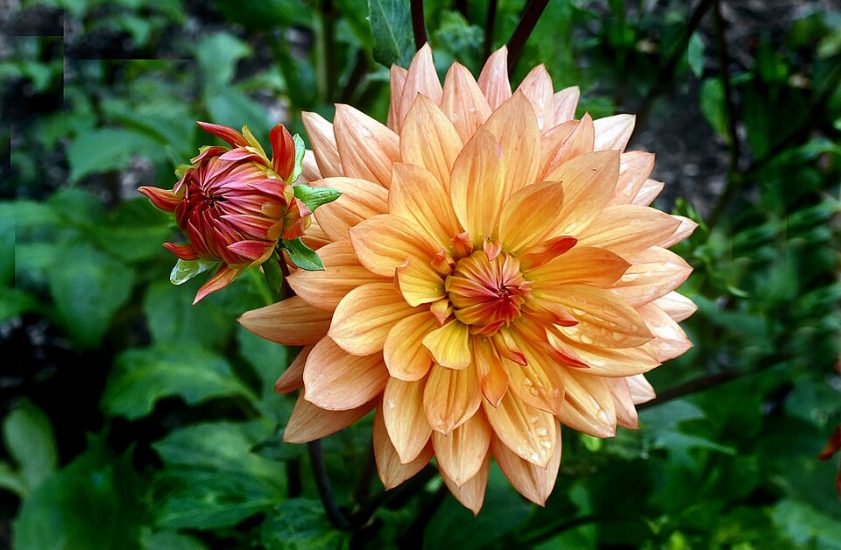
Credit Wikimedia Commons: https://commons.wikimedia.org/wiki/File:Orange_Ruby._Dahlia_(24663832702).jpg
If you’re asking what are the biggest flowers a home gardener can grow, the dinner plate dahlia is the answer most experts reach for first. Named for exactly what you’d expect, these dahlias produce blooms that commonly measure 10 to 14 inches across roughly the diameter of a dinner plate. The variety Emory Paul is particularly celebrated for its fuchsia blooms and record-setting size.
Growing info: Plant tubers in spring after the last frost in a full-sun location with rich, well-draining soil. Stake them early stems can reach 4 to 5 feet and can’t always support the weight of those oversized blooms on their own. Deadhead regularly to encourage more flowers through fall.
Bloom size: 10–14 inches across
2. Hardy Hibiscus
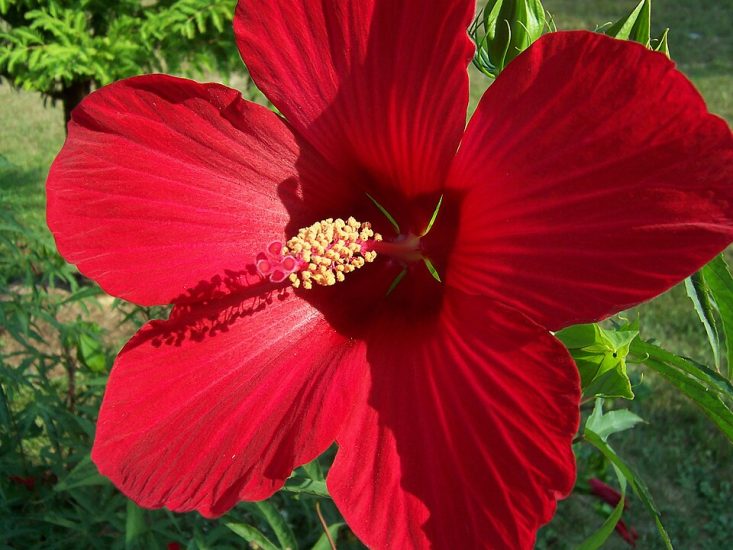
Credit Wikimedia Commons: https://commons.wikimedia.org/wiki/File:Red_Hot_Hardy_Hibiscus_(126226989).jpg
Don’t confuse this with the tropical hibiscus the hardy hibiscus (Hibiscus moscheutos) is a native perennial that can survive cold winters and still produce some of the most jaw-dropping large flowers in any summer garden. Saucer-shaped blooms can reach up to 12 inches across in shades of white, pink, red, and bicolor.
Growing info: Hardy hibiscus loves moisture and tolerates wet soil, making it perfect near ponds or rain gardens. It dies back to the ground in winter and re-emerges in late spring. Plant in full sun and water consistently for the biggest blooms.
Bloom size: Up to 12 inches across
3. Mammoth Sunflower
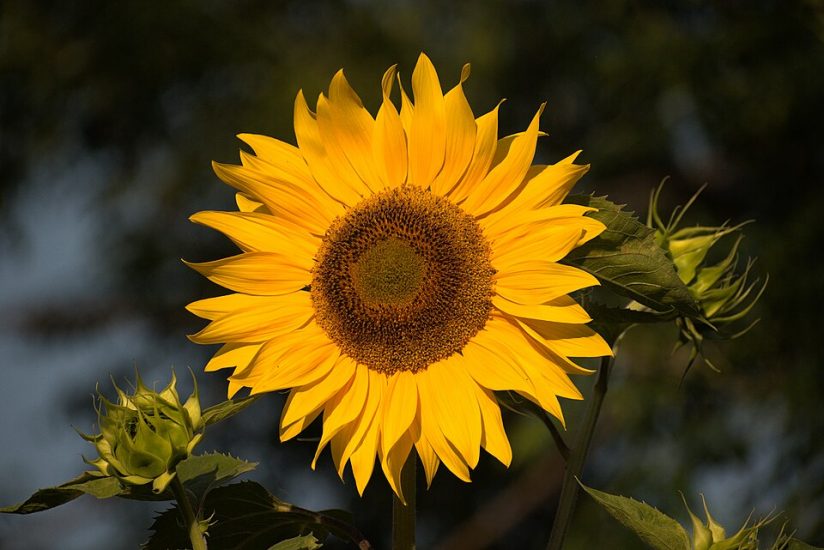
Credit Wikimedia Commons: https://commons.wikimedia.org/wiki/File:Sunflower_(Helianthus_annuus)_D35_5966_01.jpg
Sunflowers are the classic choice for anyone who wants big flowers with minimal fuss. The Mammoth Russian variety is the showstopper of the species, producing flower heads that can reach 10 to 16 inches wide on plants that tower 9 to 12 feet tall. They’re dramatic, cheerful, and surprisingly easy to grow from seed.
Growing info: Direct sow seeds after the last frost in a sunny spot. Sunflowers are drought-tolerant once established but appreciate deep watering during dry spells. The Titan variety pushes even further growing up to 14 feet tall with 2-foot-wide heads, according to Birds & Blooms.
Bloom size: 10–16 inches across
4. Tree Peony
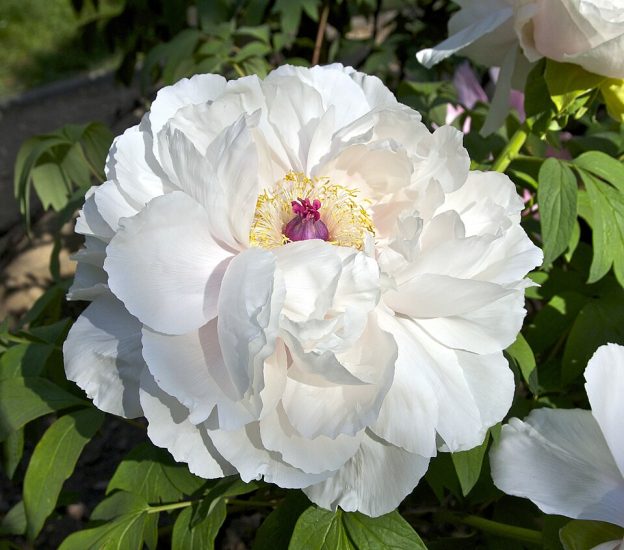
Credit Wikimedia Commons: https://commons.wikimedia.org/wiki/File:Paeonia_suffruticosa_Shin_Tohen_JdP.jpg
Herbaceous peonies are beloved, but tree peonies take things further. These deciduous shrubs can grow 4 to 5 feet tall and produce fragrant blooms up to 9 inches across in shades of white, pink, yellow, red, and deep magenta. A mature tree peony can open more than 100 blooms in a single season that’s a lot of large flowers from one plant.
Growing info: Tree peonies prefer well-draining soil and a sheltered spot with morning sun and afternoon shade. They’re slow to establish but extremely long-lived some specimens bloom for over a century. Don’t cut them back like you would an herbaceous peony.
Bloom size: Up to 9 inches across
5. Oriental Lily
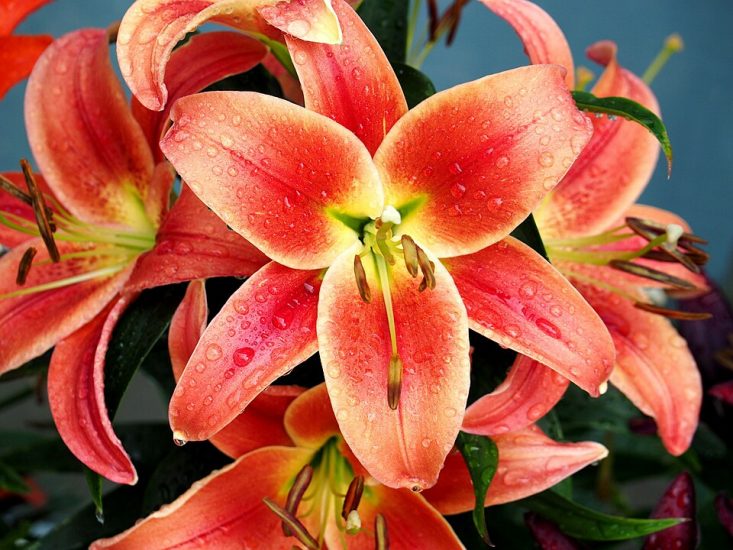
Credit Wikimedia Commons: https://commons.wikimedia.org/wiki/File:Oriental_Lily,_%27Montego_Bay%27_-_geograph.org.uk_-_5488063.jpg
The Oriental lily is one of the most iconic large flowers in the cut flower world and for good reason. Each stem produces 6 to 8 blossoms, with individual flowers reaching up to 10 inches across. The scent is intoxicating, and the pure white petals have a refined elegance that works for everything from garden beds to sympathy arrangements.
Growing info: Plant bulbs in spring in rich, well-draining soil with full sun to partial shade. Stems reach 4 to 6 feet tall. Hardy in Zones 4–9, bulbs multiply from year to year. Plant near seating areas to enjoy the fragrance up close.
Bloom size: Up to 10 inches across
6. Bigleaf Magnolia
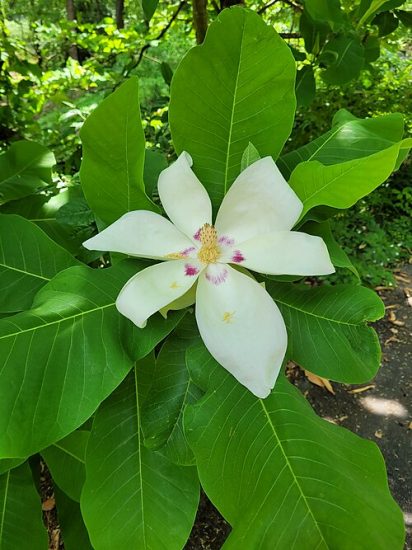
Credit Wikimedia Commons: https://commons.wikimedia.org/wiki/File:Magnolia_macrophylla_(Bigleaf_Magnolia).jpg
When people picture magnolias, they often think of the classic Southern magnolia but the bigleaf magnolia (Magnolia macrophylla) is in a different league entirely. Its creamy white, cup-shaped flowers can reach 10 to 12 inches wide and are accompanied by enormous leaves up to 32 inches long. Few garden trees make more of a statement.
Growing info: Bigleaf magnolia is a pyramidal tree suited for large gardens. It prefers partial shade and moist, well-draining soil. More of a long-term investment than a quick planting, but the payoff in sheer size and drama is unmatched.
Bloom size: 10–12 inches across
7. Hybrid Tea Rose
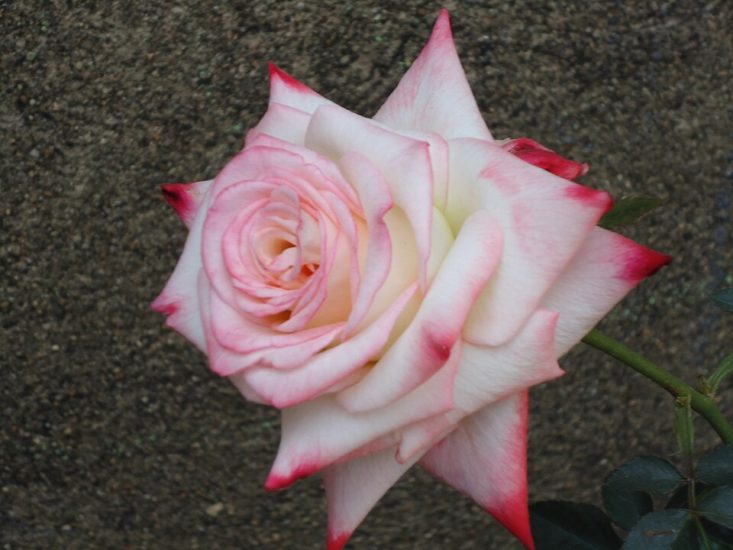
Credit Wikimedia Commons: https://commons.wikimedia.org/wiki/File:Hybrid_tea_rose_2012.jpg
Among the many types of roses, hybrid tea roses produce some of the most classically beautiful large flowers in the garden. Individual blooms can have up to 50 petals and span 4 to 6 inches across on plants that grow 3 to 8 feet tall. They bloom reliably through the growing season and come in virtually every color imaginable.
Growing info: Plant in full sun with rich, well-draining soil. Feed regularly with a rose-specific fertilizer and water at the base to prevent disease. They require more maintenance than shrub roses but reward that effort with consistently stunning blooms. Also one of the best best garden flowers for cut flower arrangements.
Bloom size: 4–6 inches across
8. Hydrangea (Smooth Hydrangea)
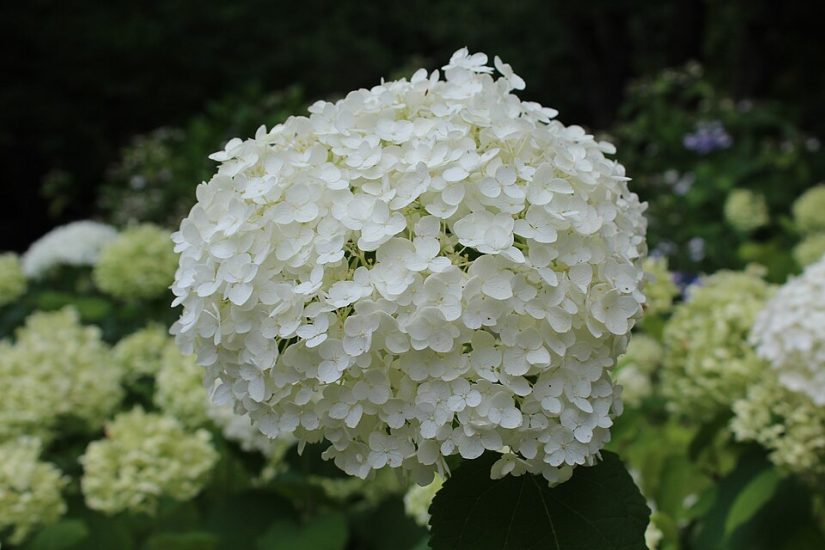
Credit Wikimedia Commons: https://commons.wikimedia.org/wiki/File:Hydrangea_arborescens_%27Annabelle%27_at_Coker_Arboretum_02.jpg
Hydrangeas are already known for their large, showy flower clusters but if you want the biggest blooms the genus has to offer, look to Hydrangea arborescens, the smooth hydrangea. Mophead clusters can measure 6 to 8 inches across, and varieties like ‘Annabelle’ are famous for their bowling ball-sized flower heads in creamy white.
Growing info: Smooth hydrangeas are among the easiest to grow they tolerate more shade and cold than other species and bloom on new wood, meaning you can cut them back hard in late winter without losing flowers. Great for beginners seeking big flowers without high maintenance.
Bloom size: 6–8 inch clusters
9. Angel’s Trumpet (Brugmansia)
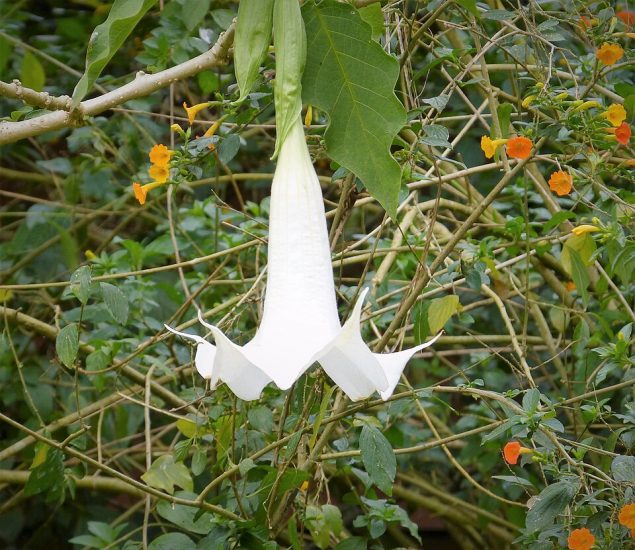
Credit Wikimedia Commons: https://commons.wikimedia.org/wiki/File:Brugmansia_candida_x_Pers._….Angels_Trumpet_-_Flickr_-_gailhampshire.jpg
If you want flowers with pure theatrical presence, angel’s trumpet delivers. These pendulous, trumpet-shaped blooms can grow 12 to 20 inches long, hanging downward from shrubs that reach 6 to 8 feet in a single season. The fragrance intensifies in the evening, making them ideal for patios and outdoor seating areas.
Growing info: Angel’s trumpet thrives in full sun to partial shade and prefers consistently moist, fertile soil. It can be grown as a container plant in colder climates and brought indoors for winter. Note: all parts of the plant are toxic if ingested plant with caution around children and pets.
Bloom size: 12–20 inches long
10. Ornamental Onion ‘Globemaster’ (Allium)
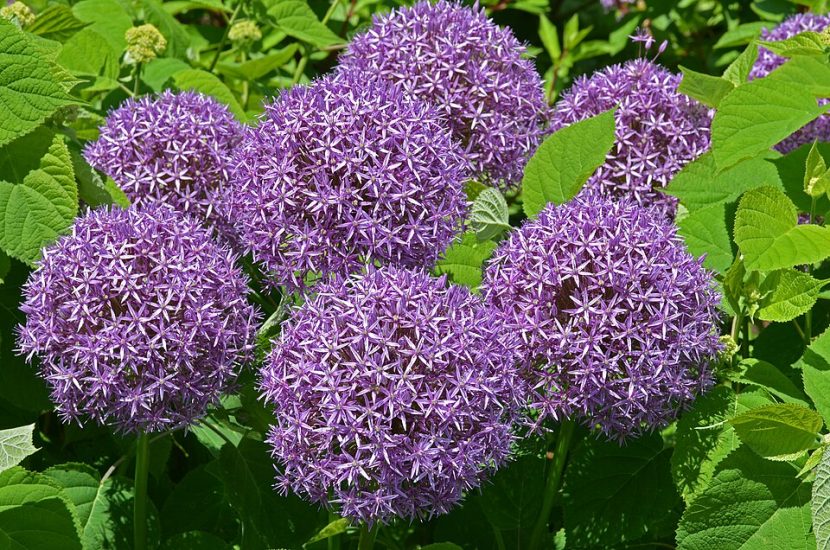
Credit Wikimedia Commons: https://commons.wikimedia.org/wiki/File:Allium_%27Globemaster%27_Flowers.JPG
Alliums are one of those plants that look almost too good to be real. ‘Globemaster’ produces spherical violet-purple orbs up to 10 inches across on 2- to 3-foot stems they look like giant purple lollipops bobbing above the garden bed. They’re also beloved by pollinators and hold their form even as they dry.
Growing info: Plant bulbs in fall for late spring to early summer blooms. Alliums prefer full sun and well-draining soil. They’re hardy in Zones 3 to 8 and naturalize over time, producing more and more flowers each year. A natural conversation starter among the plants with big flowers category.
Bloom size: Up to 10 inches across
11. King Protea

The king protea (Protea cynaroides) is South Africa’s national flower and one of the most striking big flowers you can grow in warm climates. Bowl-shaped blooms can measure up to 11 inches across and have an otherworldly look pink and cream with a structural, almost architectural quality. They’re also exceptional as cut flowers.
Growing info: King protea thrives in USDA Zones 9 to 11 in full sun with well-draining, acidic soil. It’s drought-tolerant once established and actually dislikes too much fertilizer. A great choice for Mediterranean-climate gardens.
Bloom size: Up to 11 inches across
12. Oriental Poppy
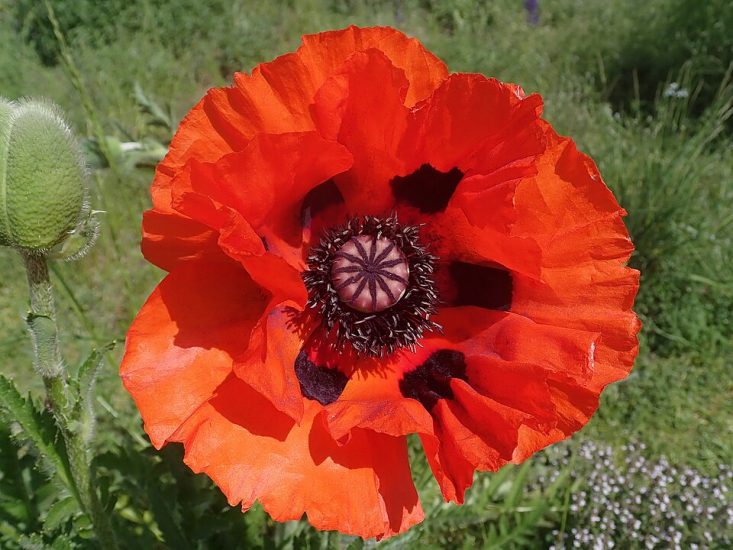
Credit Wikimedia Commons: https://commons.wikimedia.org/wiki/File:Papaver_orientale_2023-05-22_6027.jpg
Oriental poppies (Papaver orientale) might surprise you with just how large their blooms get typically 4 to 8 inches across in fiery shades of red, orange, pink, and white, with those distinctive dark centers that make them instantly recognizable. They’re one of spring’s most dramatic performers.
Growing info: Plant in full sun with well-draining soil. Oriental poppies bloom in late spring, then go dormant in summer plan your garden so neighboring plants fill the gap. Hardy across most of the US, they’re reliable perennials that return each spring with those crowd-stopping large flowers.
Bloom size: 4–8 inches across
13. Daylily (‘Primal Scream’)
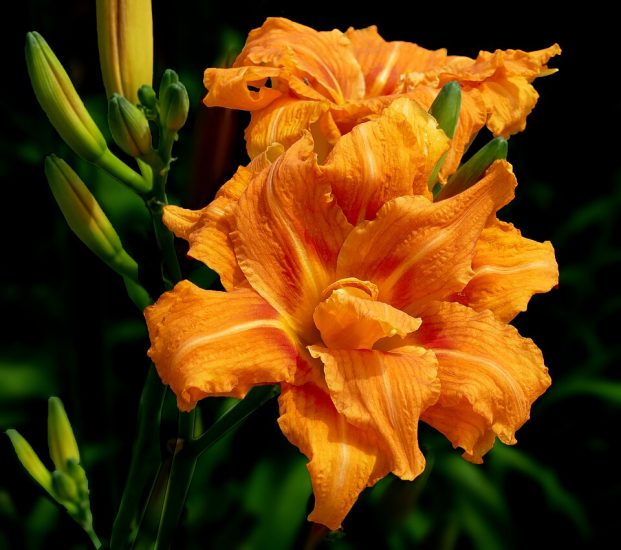
Credit Wikimedia Commons: https://commons.wikimedia.org/wiki/File:Double_daylily_–_Hemerocallis_fulva.jpg
Most daylilies are lovely but modest. The tetraploid variety ‘Primal Scream’ is another story — its tangerine-orange blooms span 6 to 8 inches wide, and the extra chromosomes of tetraploid varieties result in thicker, more intensely colored petals than standard daylilies.
Growing info: Daylilies are among the most adaptable garden plants, tolerating heat, drought, and a wide range of soil types. Plant in full sun for the biggest blooms. They spread steadily and benefit from division every 3 to 4 years. They’re also worth noting if you’re researching plants that repel mosquitoes good companions for utility and beauty together.
Bloom size: 6–8 inches across
14. Delphinium
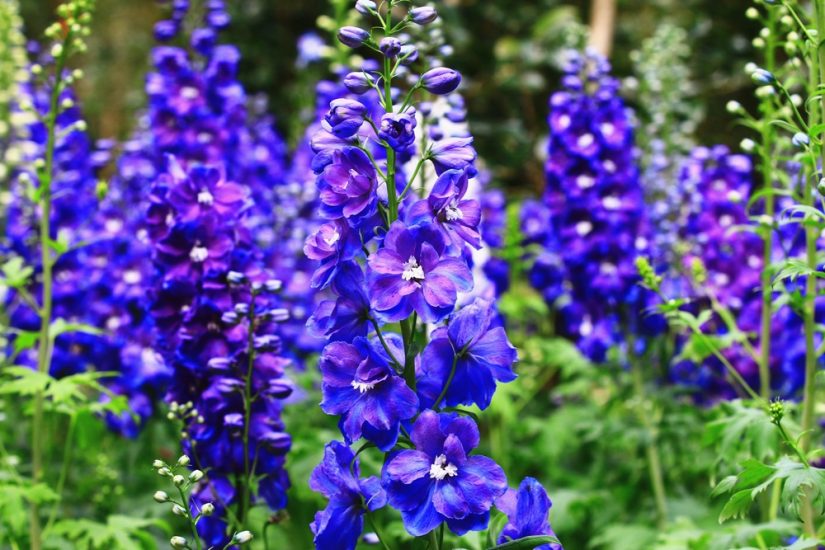
Delphiniums are all about vertical drama. While individual florets are moderate in size, the flower spikes can stretch 2 to 3 feet long, creating towering columns of blue, purple, white, or pink that command attention at the back of any border. Few big flowers deliver this kind of height.
Growing info: Delphiniums prefer cool summers, which is why they thrive in the Pacific Northwest and similar climates. Plant in full sun with rich, moisture-retentive soil. Stake stems early they’re prone to wind damage. Cut back after the first flush for a second bloom in early fall.
Bloom size: 2–3 foot flower spikes
15. Sacred Lotus
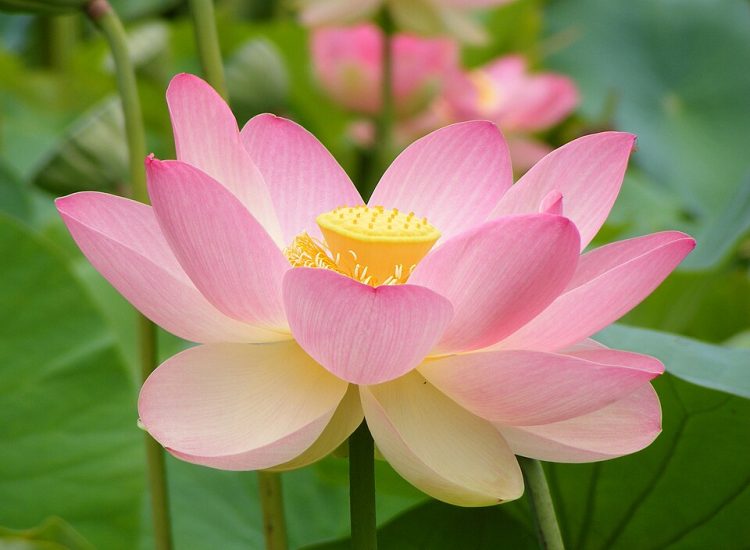
Credit Wikimedia Commons: https://commons.wikimedia.org/wiki/File:Nelumno_nucifera_open_flower_-_botanic_garden_adelaide2.jpg
For gardeners with a pond or water feature, the sacred lotus (Nelumbo nucifera) is one of the most extraordinary large flowers on the planet. Blooms can reach 8 to 12 inches across and sit above the water on stems that rise 3 to 5 feet high. The flowers are culturally significant across Asia and symbolize purity, beauty, and resilience.
Growing info: Sacred lotus requires at least 6 hours of direct sun and grows in still or slow-moving water 2 to 18 inches deep. Plant in containers submerged in your pond they’re vigorous spreaders and best contained. Hardy in Zones 5 to 10, they go dormant in winter and return reliably each summer.
Bloom size: 8–12 inches across
Bringing Big Blooms Into Your Home
You don’t need a garden to enjoy big flowers. Many of the varieties on this list dahlias, peonies, lilies, roses, and hydrangeas are staples of the cut flower world and make stunning, long-lasting arrangements. If you’re ready to bring some of that scale and beauty indoors without waiting for anything to grow, you can order flowers online and have farm-fresh bouquets delivered straight to your door.
Whether you’re planting a statement garden from scratch or just want to know which blooms will genuinely earn a double take, these plants with big flowers are a great place to start. Go big your garden (and anyone who visits it) will thank you.
Shop All

