

Deserts are often associated with harsh heat, dry soil, and rugged landscapes, but they’re also home to some of the world’s most resilient and visually striking plants. From sculptural cacti to colorful blooms that appear after seasonal rainfall, desert plants have adapted to survive in extreme conditions while adding texture, color, and life to arid environments.
Whether you’re planning a drought-tolerant garden, decorating your home with succulents, or simply wondering, “What plants live in the desert?”, there are far more options than most people realize. Many plants in the desert store water in thick leaves or stems, while others develop deep root systems or bloom briefly after rainfall to conserve energy.
In this guide, we’re highlighting more than 30 desert plants and desert flowers that thrive in dry climates, including cacti, succulents, shrubs, and flowering varieties perfect for low-water landscapes. Looking to add desert-inspired greenery indoors? You can order succulent delivery from The Bouqs Co. for easy-care plants delivered straight to your door.
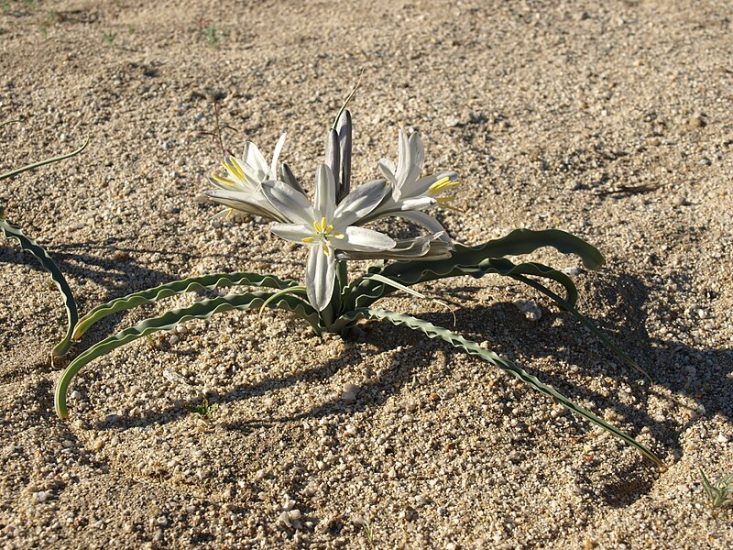
Desert Lily
Credit Wikimedia Commons: https://commons.wikimedia.org/wiki/File:Desert_lily,_Hesperocallis_undulata_(15052242654).jpg
An equally rare and stunning flower, the desert lily will have you rethinking what a “lily” can look like. The plant produces clusters of white, trumpet-shaped flowers that resemble many other types of lilies, but their foliage closely resembles that of an agave plant, which they are closely related to.
- Origin: Southwestern United States and northern Mexico
- Best Climate: Desert regions
- Sun Needs: Full sun
- Notable Feature: Seasonal blooms after rainfall
Barrel Cactus
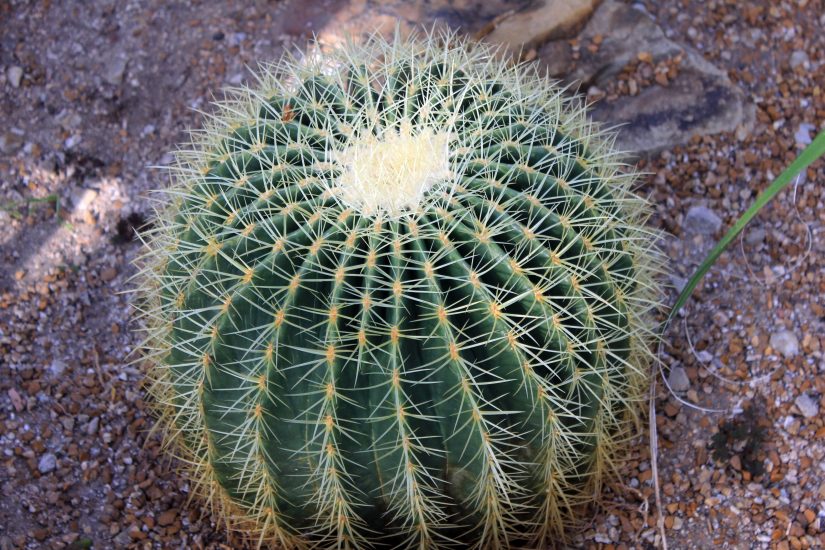
Barrel cacti grow in rounded shapes with prominent spines that help reduce water loss and provide shade to the plant’s surface.
- Origin: Southwestern United States and Mexico
- Best Climate: Hot desert climates
- Sun Needs: Full sun
- Notable Feature: Ribbed structure stores water
Yucca
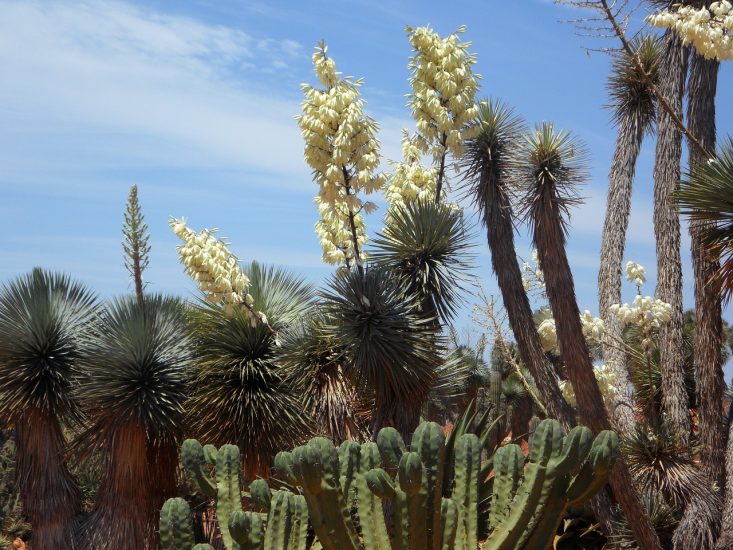
There are all kinds of yucca species, but they all share a few tell-tale characteristics. Yucca leaves are long and thin with a pointed tip, and they’re arranged in rosette form. When spring arrives, the plants send up a tall flower stalk that’s topped with a chandelier of creamy bell-shaped flowers.
- Origin: North and Central America
- Best Climate: Dry climates
- Sun Needs: Full sun
- Notable Feature: Dramatic flower stalks
Desert Rose
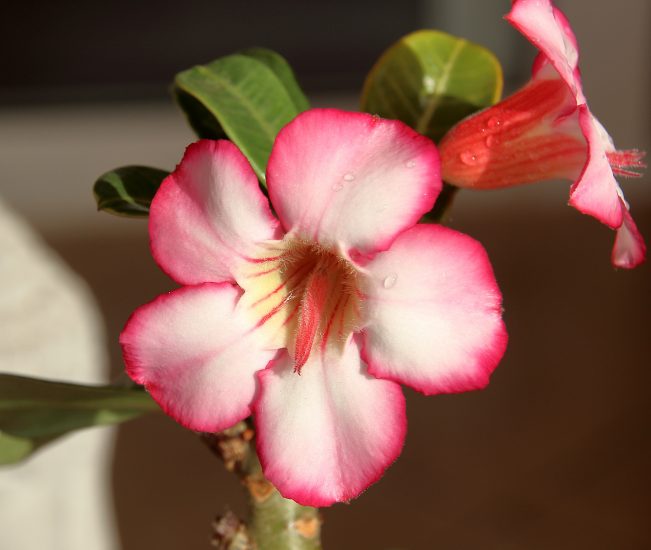
Desert rose combines thick succulent stems with bright pink or red trumpet-shaped flowers. Despite its tropical appearance, it thrives in hot dry conditions.
- Origin: Eastern Africa and the Arabian Peninsula
- Best Climate: Warm arid climates
- Sun Needs: Full sun
- Notable Feature: Thick swollen trunk stores water
Agave
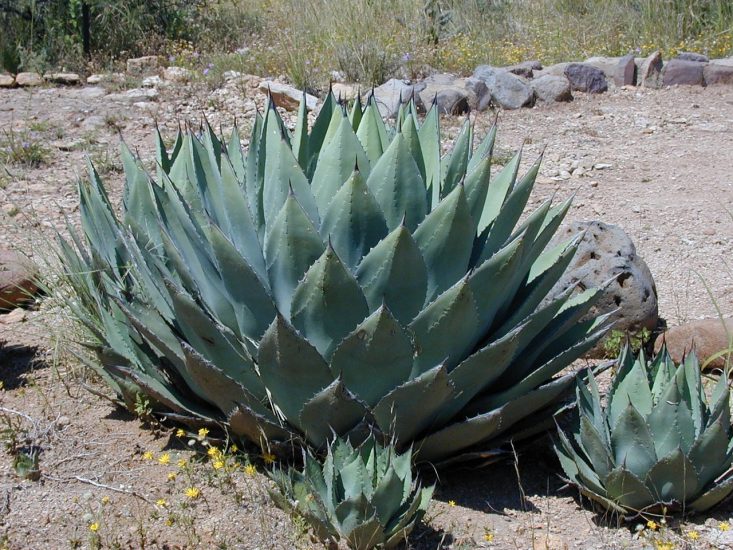
Agave plants create dramatic rosettes with thick pointed leaves. Many varieties tolerate intense heat and poor soil conditions, making them popular for xeriscaping.
- Origin: Mexico and the southwestern United States
- Best Climate: Arid regions
- Sun Needs: Full sun
- Notable Feature: Architectural shape
Ocotillo
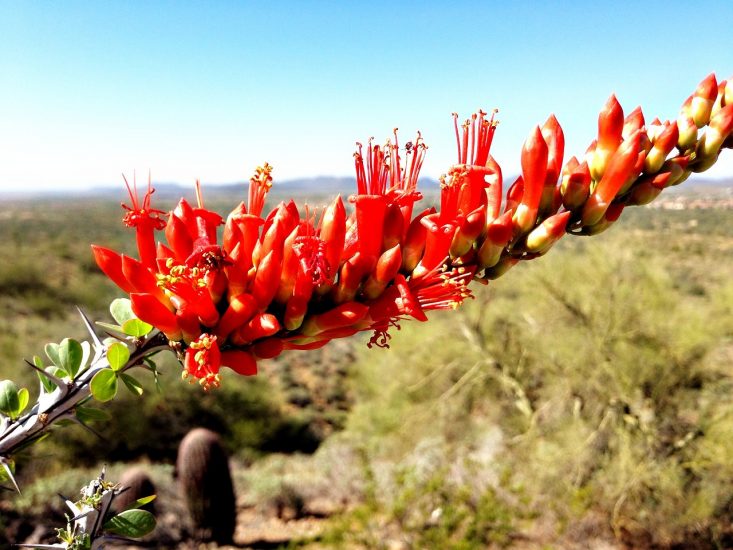
When you first spot an ocotillo plant, you may wonder if the hot and dry desert has you hallucinating. But rest assured, the plant’s tall, thorny, wild stems are real. Also known as devil’s walking stick or candlewood, this desert plant’s stems become topped with clusters of bright red flowers in the spring or early summer.
- Origin: Southwestern United States and northern Mexico
- Best Climate: Southwestern deserts
- Sun Needs: Full sun
- Notable Feature: Rapid leaf growth after rain
Brittlebush
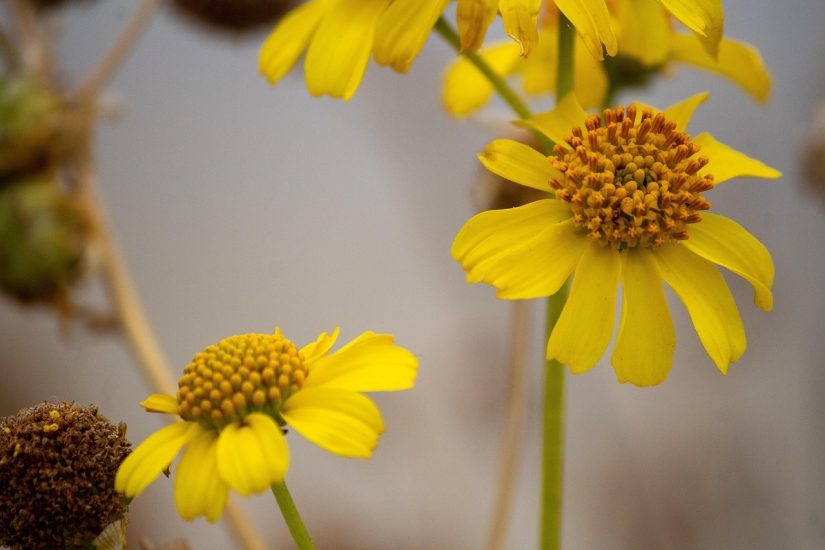
Brittlebush is a drought-tolerant shrub with soft silver foliage and daisy-like yellow blooms.
- Origin: Sonoran and Mojave Deserts
- Best Climate: Arid regions
- Sun Needs: Full sun
- Notable Feature: Reflective leaves reduce heat absorption
Ghost Plant
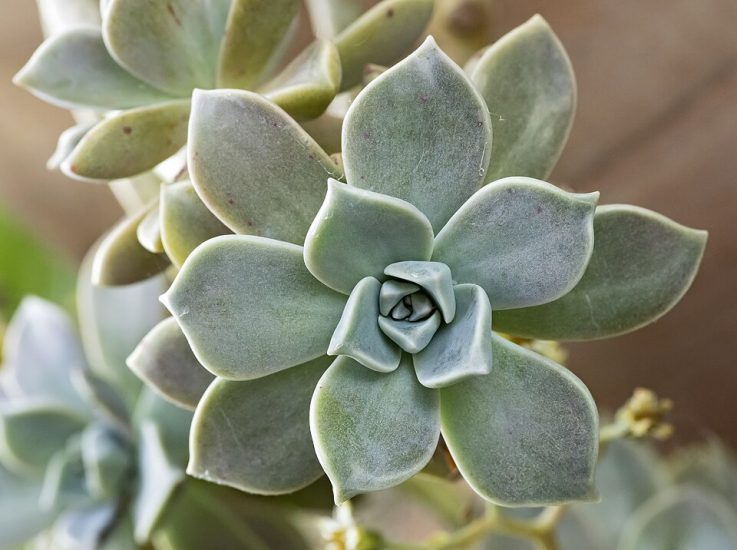
Credit Wikimedia Commons: https://commons.wikimedia.org/wiki/File:(MHNT)_Graptopetalum_paraguayense_-_leaves.jpg
Ghost plants are compact succulents with pale blue-gray leaves that thrive in containers and rock gardens.
- Origin: Mexico
- Best Climate: Dry climates
- Sun Needs: Full sun to partial shade
- Notable Feature: Rosette-shaped foliage
Burro’s Tail
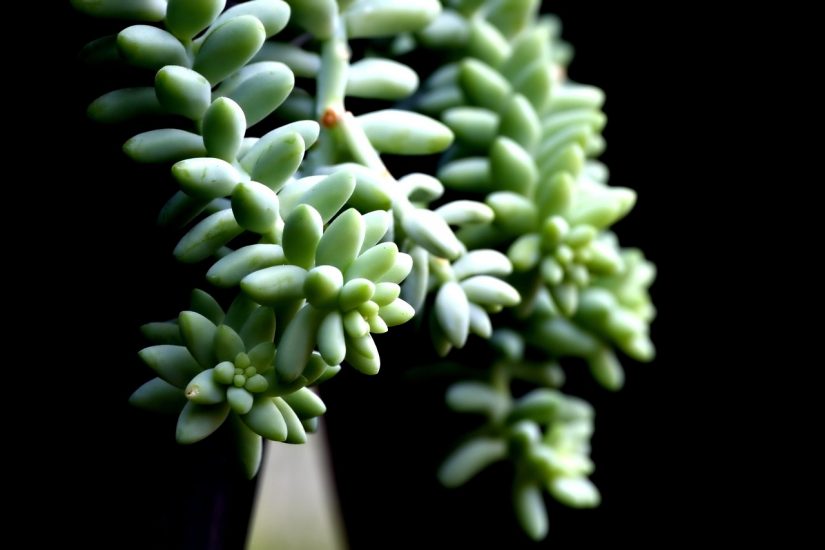
Burro’s tail is a trailing succulent with bead-like leaves that spill beautifully from hanging containers.
- Origin: Southern Mexico and Honduras
- Best Climate: Warm dry climates
- Sun Needs: Bright indirect light
- Notable Feature: Water-storing leaves
Cholla Cactus
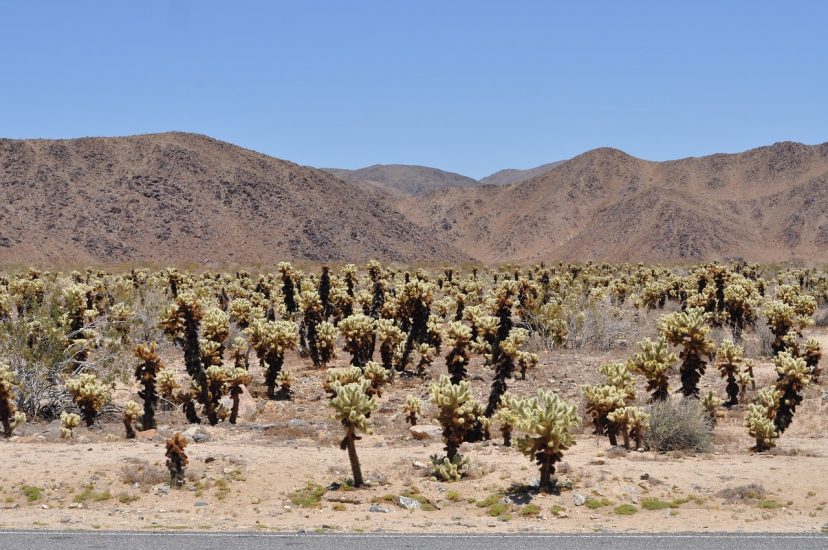
Cholla cacti feature cylindrical stems covered in dense spines that shimmer in sunlight.
- Origin: Southwestern United States and Mexico
- Best Climate: Desert climates
- Sun Needs: Full sun
- Notable Feature: Protective spines reduce water loss
Crown of Thorns
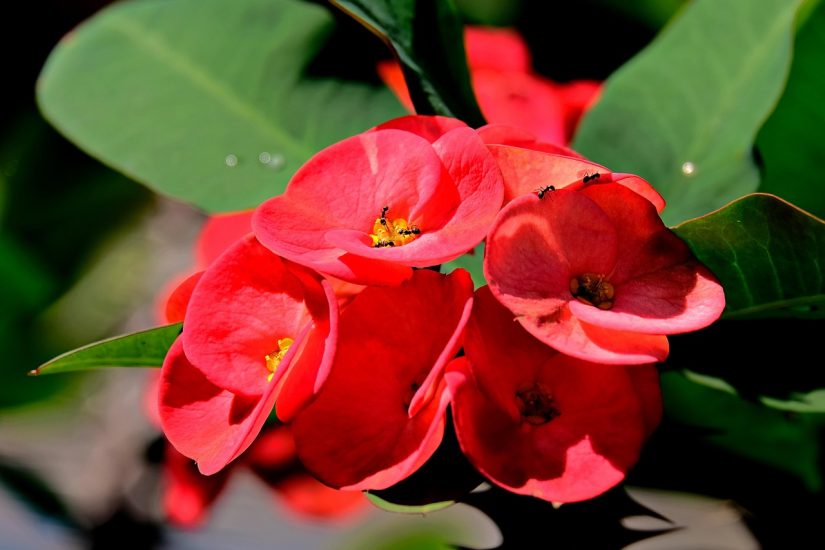
Crown of thorns produces colorful blooms nearly year-round in warm climates while tolerating drought conditions.
- Origin: Madagascar
- Best Climate: Warm arid climates
- Sun Needs: Full sun
- Notable Feature: Long flowering period
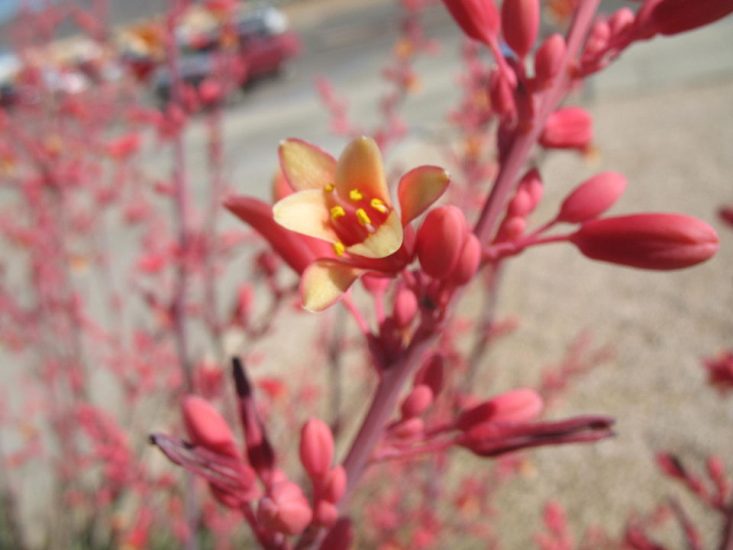
Red Yucca
Credit Wikimedia Commons: https://commons.wikimedia.org/wiki/File:Hesperaloe_(Agavaceae)_Hesperaloe_parviflora_Bl%C3%BCtenansicht_fh.jpg
Red yucca produces coral-colored flower spikes that attract hummingbirds and pollinators.
- Origin: Texas and northern Mexico
- Best Climate: Arid climates
- Sun Needs: Full sun
- Notable Feature: Low water requirements
Fishhook Barrel Cactus
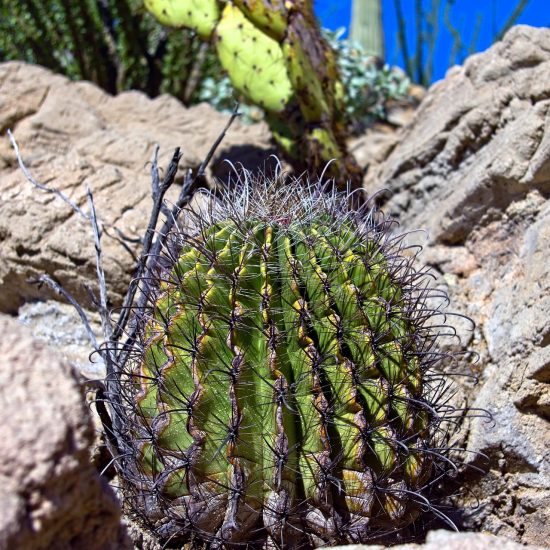
This compact cactus produces vibrant flowers and curved spines designed to protect stored moisture.
- Origin: Southwestern United States and northern Mexico
- Best Climate: Desert environments
- Sun Needs: Full sun
- Notable Feature: Hooked spines
Desert Willow
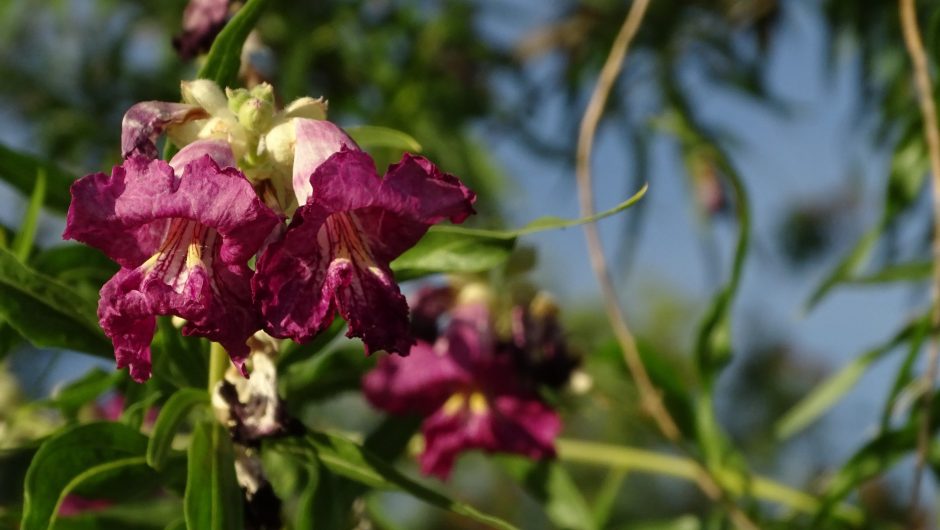
Desert willow trees feature trumpet-shaped pink flowers and narrow willow-like leaves.
- Origin: Southwestern United States and Mexico
- Best Climate: Desert climates
- Sun Needs: Full sun
- Notable Feature: Fragrant blooms
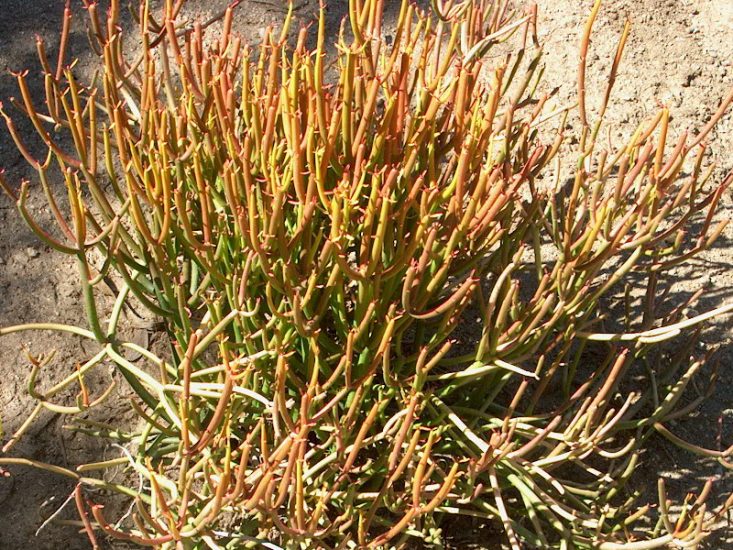
Firestick Plant
Credit Wikimedia Commons: https://commons.wikimedia.org/wiki/File:093_Euphorbia_Tirucalli,_AKA_Pencil_Cactus,_Fire_Stick.jpg
Firestick plants feature pencil-like stems that turn bright orange and red in sunlight and cooler temperatures.
- Origin: Eastern and southern Africa
- Best Climate: Warm arid climates
- Sun Needs: Full sun
- Notable Feature: Color-changing stems
Prickly Pear Cactus
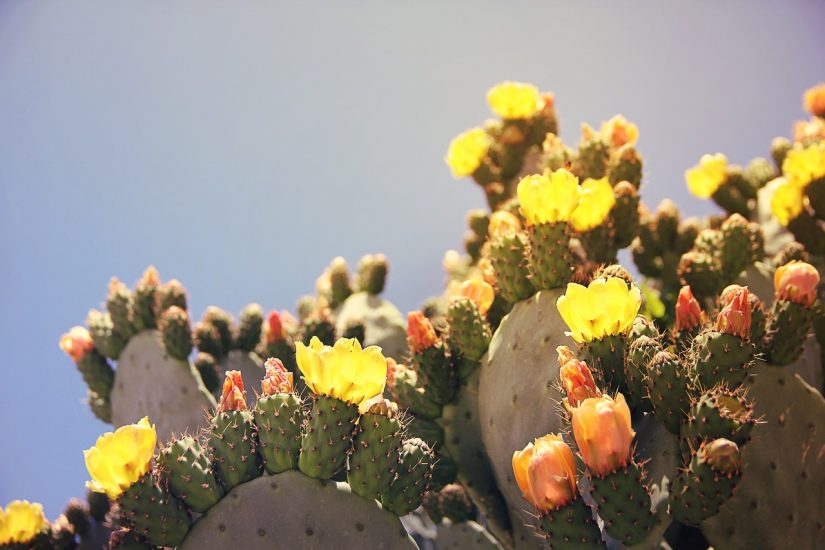
Although there are a few different species of prickly pear cactus, all of them sport flattened leaves that resemble beavertails. When spring arrives, the cacti produce beautiful pink, purple, or yellow cup-shaped flowers atop their leaves. These leaves eventually turn into soft and sweet red or pink fruits.
- Origin: North and South America
- Best Climate: Desert and semi-arid climates
- Sun Needs: Full sun
- Notable Feature: Bears edible fruit called tunas
Joshua Tree
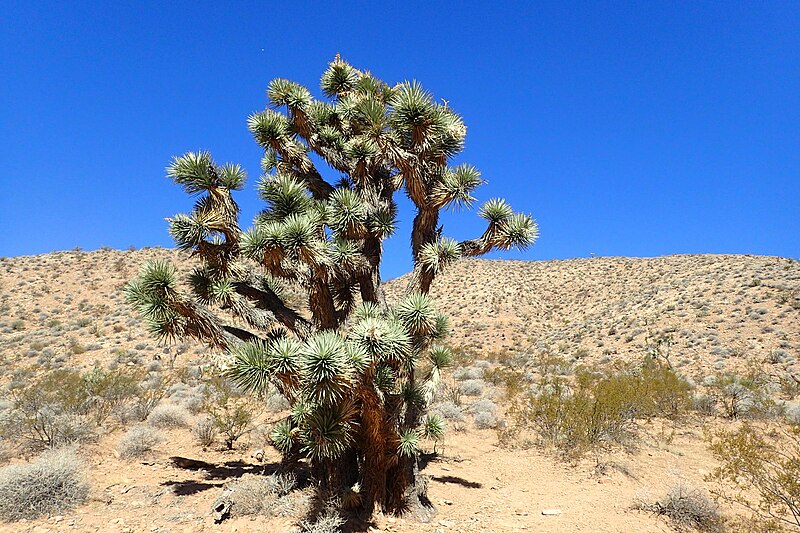
Credit Wikimedia Commons: https://commons.wikimedia.org/wiki/File:Yucca_brevifolia_kz01.jpg
While the Joshua tree is technically a species of yucca, we think these desert plants deserve special recognition. After all, there’s an entire National Park named after them! If you’ve ever seen the trees in person, you know they seem like they’re from another plant with abnormal thick branches topped with spiky leaves.
- Origin: Mojave Desert in California, Nevada, Utah, and Arizona
- Best Climate: Dry desert environments
- Sun Needs: Full sun
- Notable Feature: Unique sculptural appearance
Aloe Vera
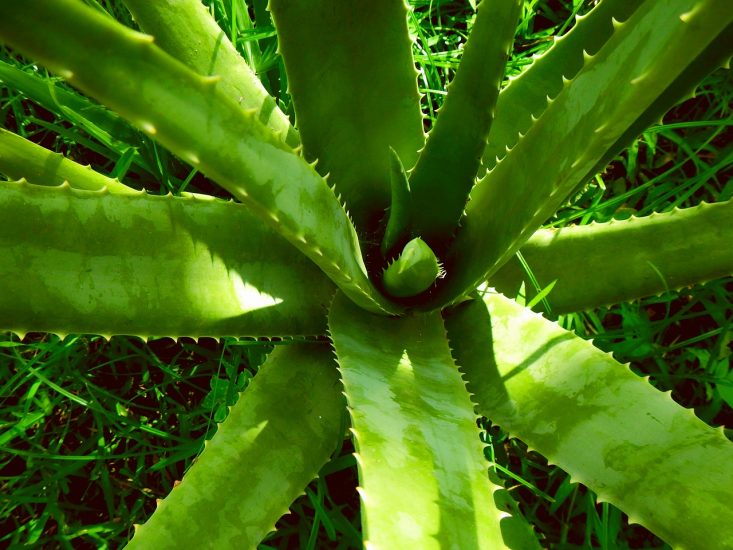
Aloe vera is one of the most popular succulents thanks to its medicinal gel and low-maintenance care requirements. Its thick leaves store water efficiently, helping it thrive in dry environments.
- Origin: Arabian Peninsula
- Best Climate: Warm, dry climates
- Sun Needs: Bright indirect light to full sun
- Notable Feature: Gel-filled leaves
Desert Marigold
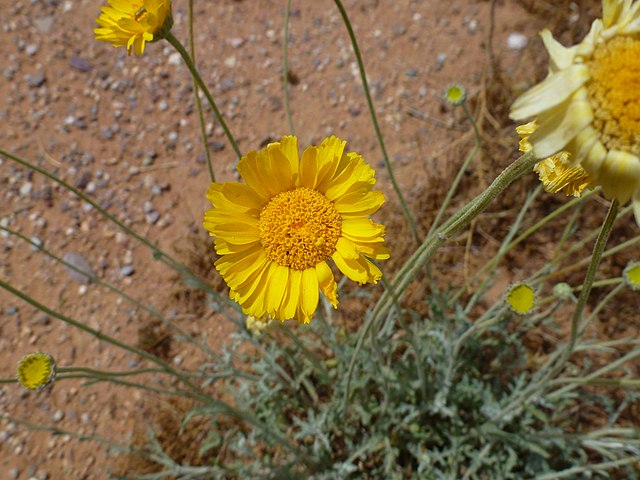
Credit Wikimedia Commons: https://commons.wikimedia.org/wiki/File:Desert_Marigold,_Baileya_multiradiata_-_panoramio_(1).jpg
When you look at the desert marigold’s subdued gray leaves, you might not think much of this plant. But just wait until spring when this short-lived perennial produces bright yellow daisy-like flowers. These flowers often grow in large patches, turning large areas aglow from spring through fall.
- Origin: Southwestern United States and northern Mexico
- Best Climate: Desert regions
- Sun Needs: Full sun
- Notable Feature: Long blooming season
Saguaro Cactus
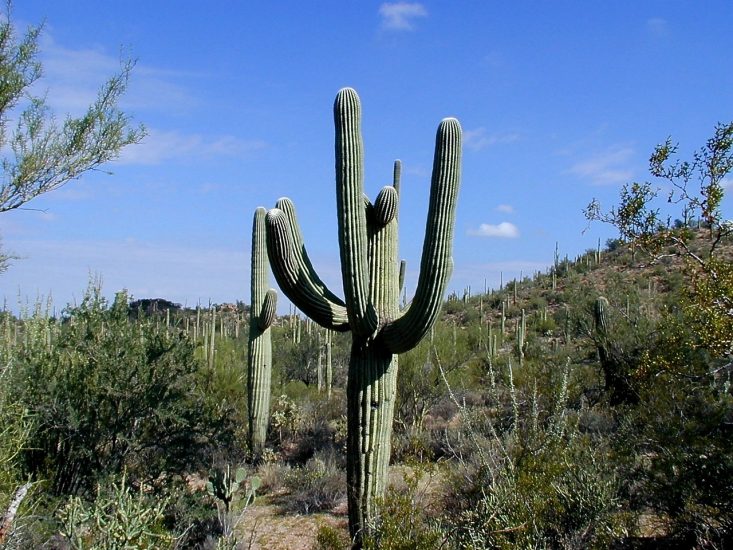
The saguaro cactus is one of the most recognizable desert plants in the American Southwest. Native to the Sonoran Desert, these towering cacti can grow over 40 feet tall and live for more than 150 years.
- Origin: Sonoran Desert in Arizona, California, and northwestern Mexico
- Best Climate: Hot desert regions
- Sun Needs: Full sun
- Notable Feature: Stores large amounts of water in expandable stems
Echeveria
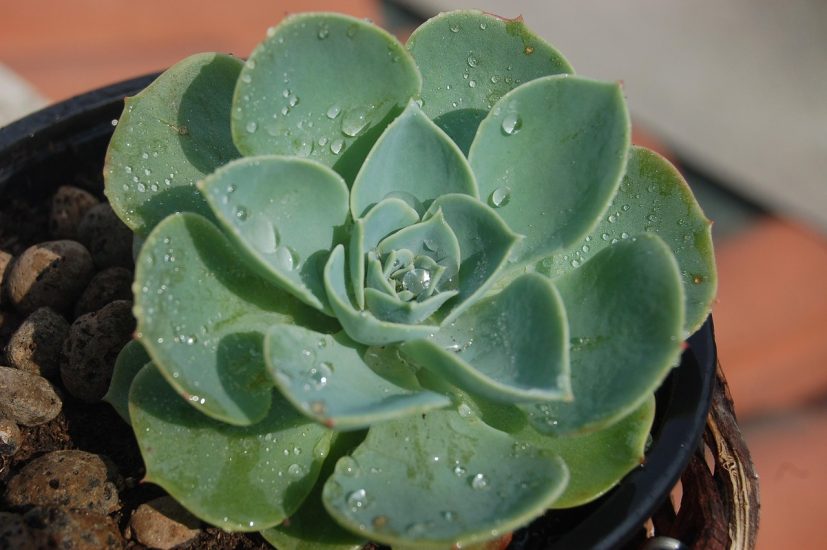
Echeverias are rosette-forming succulents popular in indoor and outdoor desert-inspired gardens.
- Origin: Mexico and Central America
- Best Climate: Warm dry regions
- Sun Needs: Bright light
- Notable Feature: Symmetrical rosette shape
Texas Sage
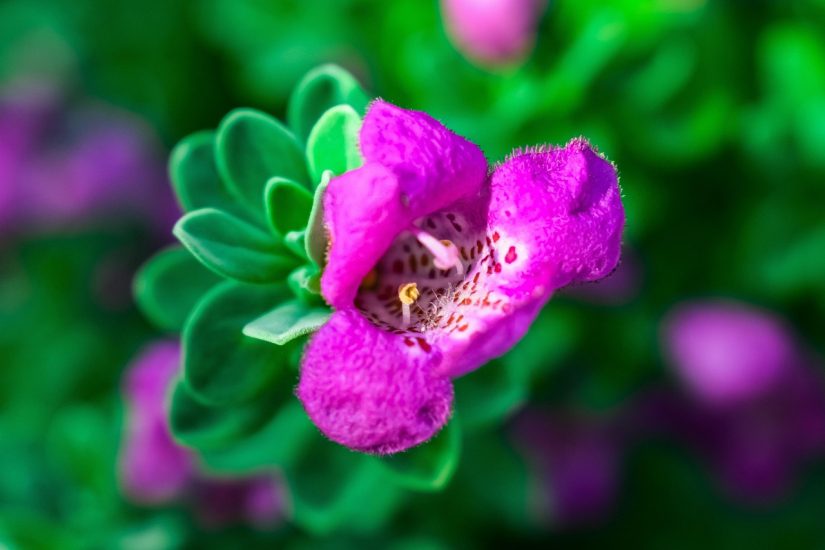
Texas sage is a hardy shrub with silver foliage and purple blooms that often appear after rainstorms.
- Origin: Texas, New Mexico, and northern Mexico
- Best Climate: Hot dry climates
- Sun Needs: Full sun
- Notable Feature: Drought tolerance
Some Additional Desert Plant Favorites:
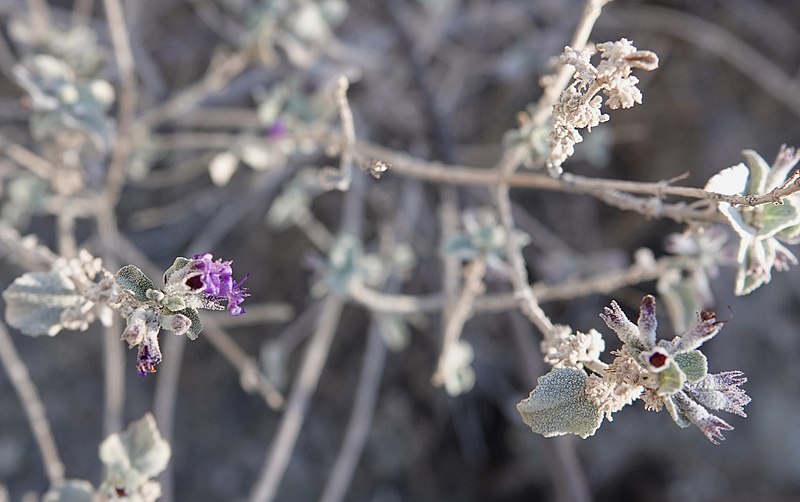
Desert Lavender
Credit Wikimedia Commons: https://commons.wikimedia.org/wiki/File:Condea_emoryi_109409802.jpg
When you think of lavender, you may envision rugged Mediterranean cliffs or manicured French gardens. But the desert lavender erupts from sandy and gravelly soils in the Southwest. Like most types of lavender, these desert plants produce beautiful purple flowers and an alluring floral fragrance.
Hedgehog Cactus
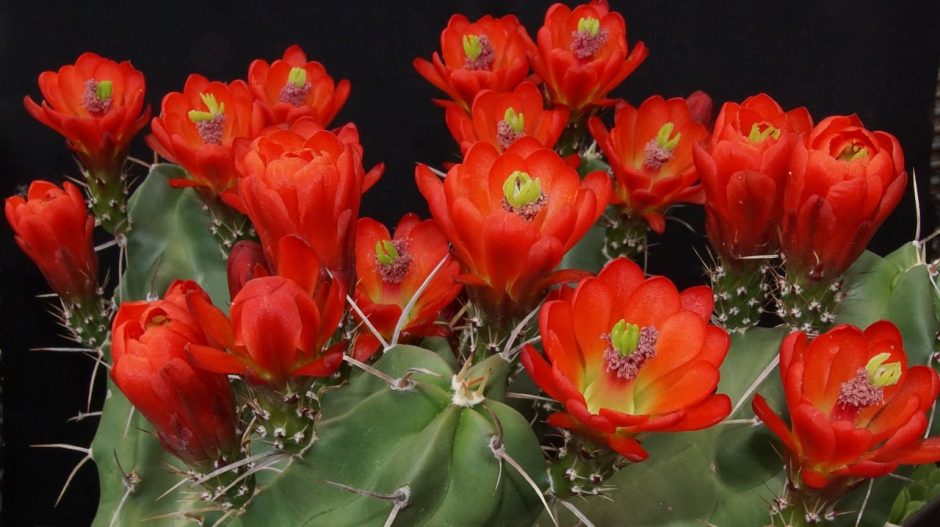
The hedgehog cacti genus consists of tiny, spiky plants that are just as cute as the spiny critter they’re named after. These cacti remain small, but their short stature doesn’t prevent them from turning heads. Each spring and summer, the tops of the cacti stems become dotted with vibrant cup-shaped flowers ranging in color from red to yellow to pink.
Organ Pipe Cactus
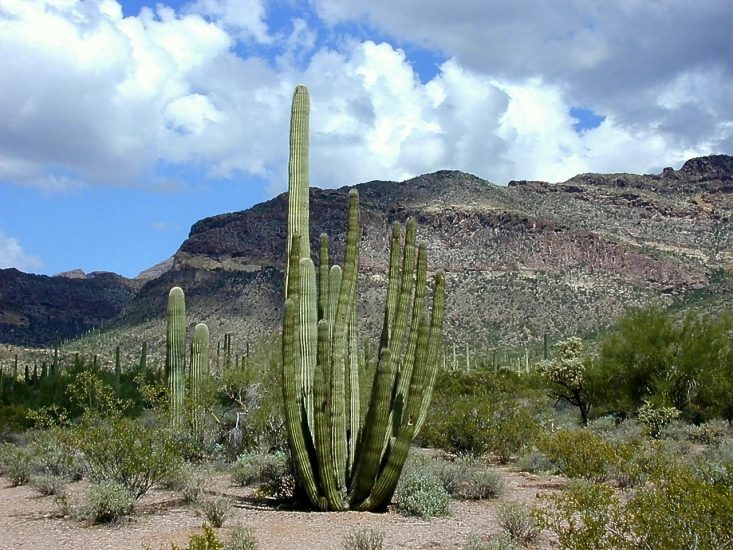
If you guessed these cacti’s stems resemble organ pipes, you’re right! The organ pipe cactus makes a statement with clusters of tall stems sprouting up from the same base. During the spring, the plants send out beautiful purple flowers, but since these flowers only bloom at night, you have to grab your flashlight to see them. The flowers give way to a sweet red fruit that’s enjoyed by wildlife and humans.
Creosote Bush
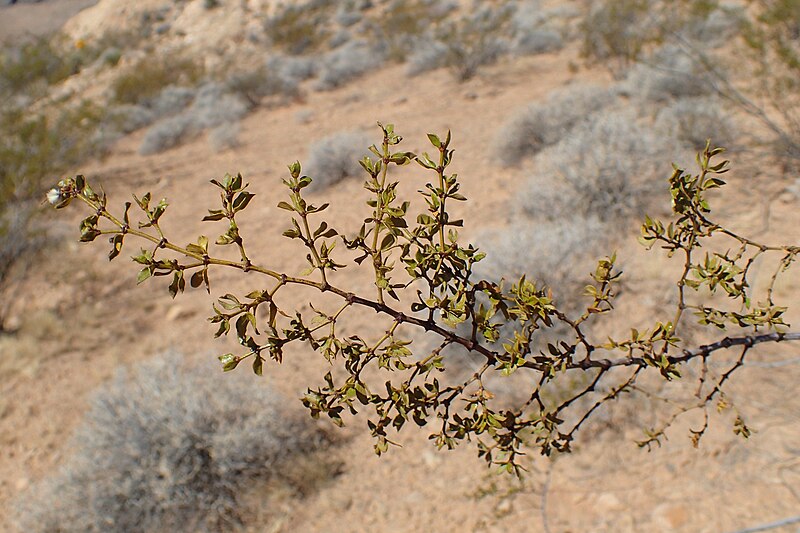
Credit Wikimedia Commons: https://commons.wikimedia.org/wiki/File:Larrea_tridentata_kz01.jpg
An important desert plant in much of the Southwest United States, the creosote bush grows as a medium to large shrub covered with small green leaves. When the desert experiences rain, the bushes release an unmistakable earthy smell into the air. That’s why you may hear people say that creosote bushes smell like rain. While the shrubs are beautiful year-round, keep an eye out for their yellow flowers in spring.
Yellow Palo Verde
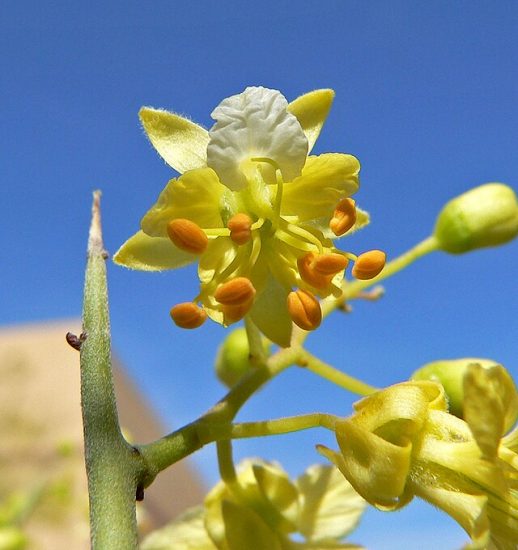
Credit Wikimedia Commons: https://commons.wikimedia.org/wiki/File:Parkinsonia_microphylla_2.jpg
Also known as the little leaf palo verde, this small tree thrives in arid areas that cause other trees to perish. From a distance, the trees seem leafless, but once you get closer you’ll notice the plant’s small, round leaves contrasting against the yellow bark. When spring arrives, the tree sends out a beautiful display of small yellow flowers.
Desert Globemallow
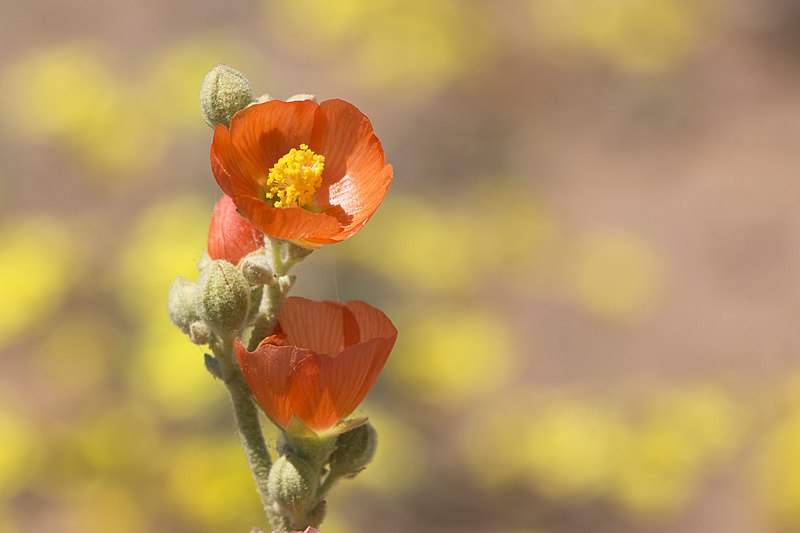
Credit Wikimedia Commons: https://commons.wikimedia.org/wiki/File:Desert_globemallow,_Sphaeralcea_ambigua_(31162184331).jpg
No matter where you live, you can find a type of mallow sending out delicate five-petal flowers. But this perennial’s green leaves and orange to pink flowers are stunning against the sepia-toned desert. Unlike many plants in the desert, desert globemallow can flower year-round, as long as there’s enough moisture in the ground.
Southwestern Yellow Columbine
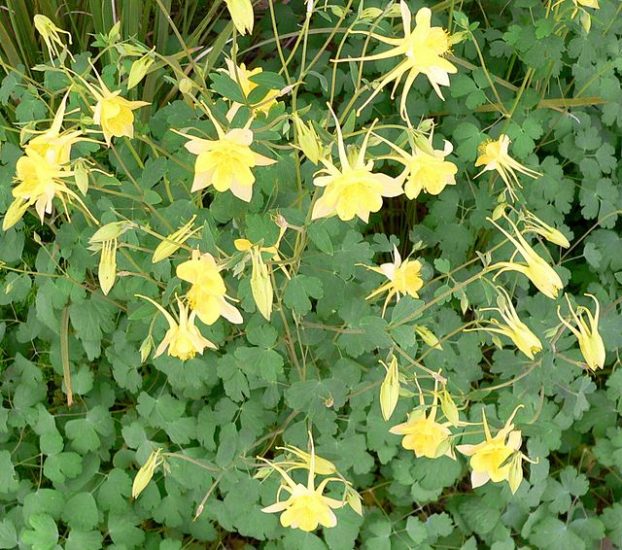
Credit Wikimedia Commons: https://commons.wikimedia.org/wiki/File:Aquilegia_chrysantha_3.jpg
When you think of desert plants, you probably imagine cacti, succulents, and other drought-tolerant species. But you can’t forget the plants that pop up alongside that trickling desert stream and sought-after oasis. The southwestern yellow columbine seeks out moist desert areas and uses this moisture to help it produce beautiful yellow flowers.
Firewheel
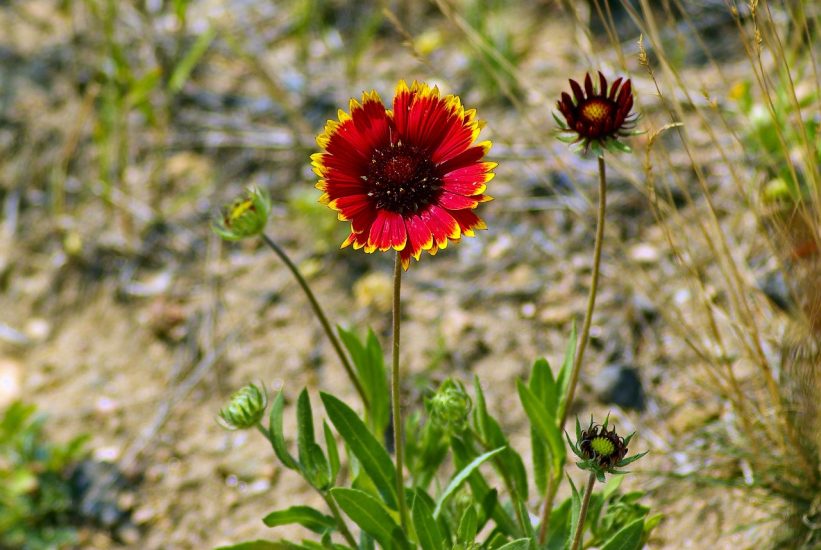
A common flower throughout much of the United States, firewheel brightens up desert landscape with its red and yellow flowers. Also known as blanket flower or Indian blanket, these desert flowers grows best in disturbed areas or poor soils.
Pringle Manzanita
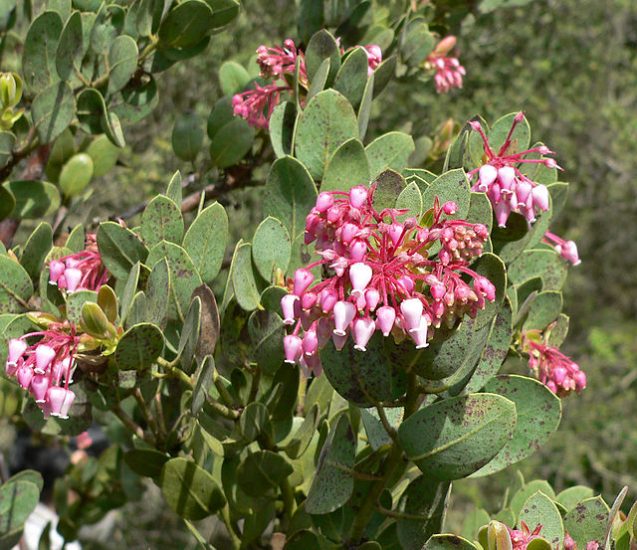
Credit Wikimedia Commons: https://commons.wikimedia.org/wiki/File:Arctostaphylos_pringlei_ssp_drupacea_2.jpg
You can find the scrubby manzanitas throughout much of the West Coast, but few species are suited to survive arid desert conditions. The pringle manzanita thrives in these environments where it produces densely packed light green leaves and clusters of tiny bell-shaped flowers. The plants eventually produce tiny red berries that are a favorite snack of birds and small mammals.
Mesquite
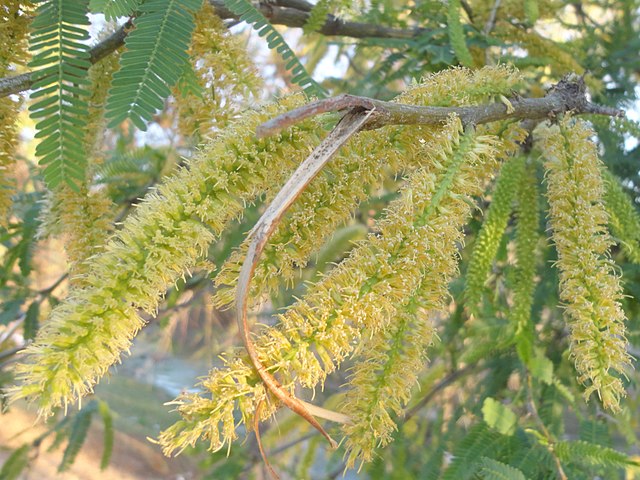
Credit Wikimedia Commons: https://commons.wikimedia.org/wiki/File:Prosopis_laevigata_-_flowers.jpg
Known for their slender branching form and long root systems, mesquite trees are a desert icon. Their extremely hard wood is valued for building and the large seed pods are an important food source for wildlife.
Why Desert Plants Are So Popular
Desert plants continue growing in popularity because they combine sculptural beauty with low-maintenance care. Many homeowners choose drought-tolerant landscaping to reduce water use while still creating visually interesting outdoor spaces. You can check out our succulent plant care for more tips.
From flowering desert flowers like ocotillo and desert marigold to iconic cacti and modern types of succulents, these resilient plants prove that dry climates still support incredible biodiversity and beauty. Whether you’re building a xeriscape garden, decorating your home with succulents, or learning more about what plants live in the desert, these varieties offer color, texture, and adaptability for nearly any space.
Now that you’re familiar with some of the unique plants desert conditions create, think about what plants you’d like to bring home. While a saguaro cactus isn’t the best choice for a houseplant, aloe and more types of succulents make perfect indoor companions. Just take a minute to learn about succulent plant care then enjoy all the beauty your plant offers.
Shop All

