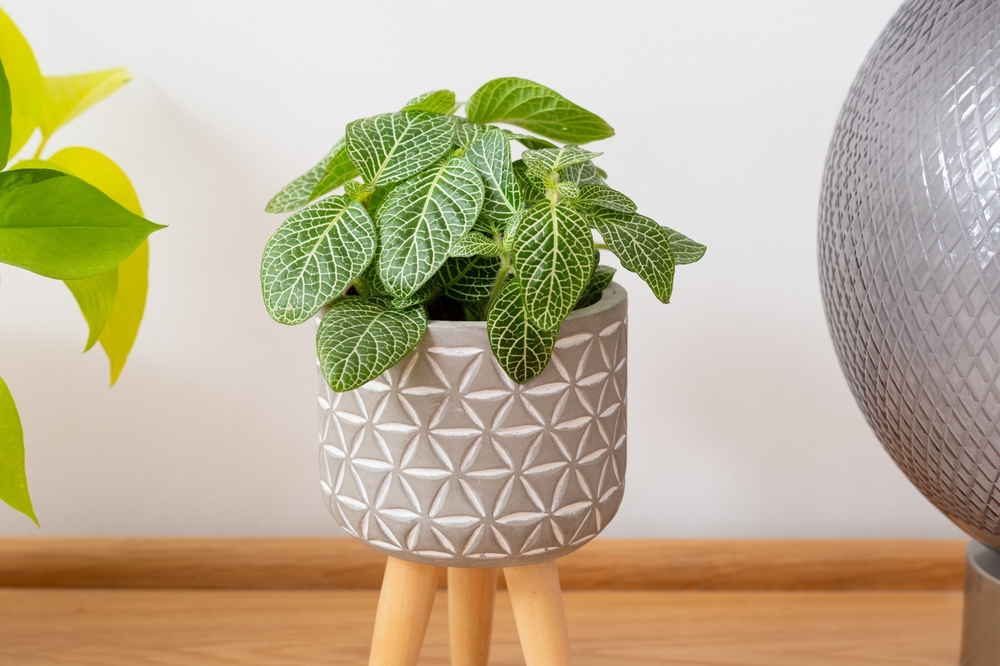
With veins in pink, red, or silvery white running across deep green leaves, the fittonia is a beauty that can look hand-painted. It’s also called the nerve plant or mosaic plant, and it’s small enough for a desk, a bookshelf, or a terrarium. It has a reputation for being dramatic, since it will collapse in a heap the moment it gets thirsty. The good news is that it usually bounces back within hours of a drink!
This Fittonia plant care guide covers everything you need to know, from unboxing to potting to keeping your plant lush for years. If you’ve been wondering how to care for a fittonia plant without stress, you’re in the right place.

Get 20% off on Bouqs.com with code BOUQSBLOG. Exclusions apply.
Fittonia Care After Delivery
If your fittonia arrived through plant delivery, a little attention in the first few days sets it up for success. Fittonias are sensitive to shipping stress, so take these steps as soon as the box arrives:
- Unpack right away: Open the box, gently slide the plant out, and remove any protective sleeve or wrapping. Don’t pull it by the stems.
- Check the soil: If it feels dry, water lightly until moisture drains from the bottom. If it’s already damp, hold off.
- Let it rest: Place it in bright, indirect light away from vents, heaters, and drafty doors. A few droopy or crinkled leaves after travel are normal and typically recover in a few days.
- Trim damaged leaves: Snip off any brown or crushed foliage with clean scissors so the plant can direct energy to new growth.
- Skip the fertilizer: Give it a couple of weeks to settle in before feeding.
If your plant wilts dramatically, don’t panic. Fittonias collapse when thirsty, and a thorough watering usually revives them within an hour or two. That said, if the leaves are limp and the soil is soggy, overwatering is the more likely culprit, so let the top layer dry slightly before watering again.
Caring for Fittonia in Gardens
Fittonias are tropical, so most people grow them indoors. But if you live in a warm, frost-free climate, they can work beautifully as a shady ground cover. According to the Royal Horticultural Society, fittonia is a creeping evergreen perennial that prefers partial shade and moist, well-drained soil. Here’s what to know about caring for fittonia plants outdoors.
When to Plant
Plant fittonia outdoors in spring, after nighttime temperatures stay reliably above 60°F. These plants can’t tolerate frost, and they start to suffer when temperatures drop into the 50s. In cooler regions, treat them as seasonal container plants and bring them inside before fall.
Where to Plant (Sunlight Needs)
Choose a spot with dappled or filtered light, such as under a tree canopy or on the north or east side of your home. Direct afternoon sun scorches the delicate leaves and washes out their color. Too little light, on the other hand, can dull the veining. Fittonia also loves humidity, so a sheltered, slightly damp corner of the garden is ideal.
When to Water
Keep the soil consistently moist but never soggy. In the garden, that usually means watering when the top half inch of soil begins to dry out, which may be every few days in hot weather. A layer of mulch helps hold moisture in. Good drainage matters, since standing water invites root rot.
Common Pests and Diseases
Fittonias are generally trouble-free, but a few problems can show up:
- Mealybugs and aphids: These sap-suckers cluster on stems and under leaves. Wipe them off with a cotton swab dipped in rubbing alcohol, or spray with insecticidal soap.
- Spider mites: Fine webbing and stippled leaves signal mites, which thrive in dry air. Raising humidity helps prevent them.
- Fungus gnats: These tiny flies breed in constantly wet soil. Let the surface dry slightly between waterings.
- Root rot and leaf spot: Both come from too much moisture and poor airflow. Remove affected leaves, improve drainage, and water at the base rather than overhead.
Complementary Plants
Fittonia pairs well with other shade-loving, moisture-friendly plants. Try it alongside ferns, hostas, or peace lilies. Its low, creeping habit also makes a lovely contrast to tall, bold foliage like the ones in our alocasia plant care guide. If you enjoy patterned leaves, caring for begonia plants is a natural next step, since they enjoy similar conditions.
Growing Fittonia in Containers
Containers are where fittonias truly shine. Their compact size and humidity-loving nature make them well suited to indoor life, and it’s the easiest way to control their environment. Here’s how Fittonia plant care works in a pot.
Light: Place your plant in bright, indirect light. An east-facing window is ideal, or set it a few feet back from a south- or west-facing window. Fittonias also handle lower light, though the vein colors may fade.
Water: Aim for evenly moist soil. Water when the top of the soil just begins to dry, and empty any excess from the saucer. Because fittonias wilt so obviously, they’ll tell you when they need water. Just don’t rely on wilting as your only schedule.
Humidity: This is the big one. Fittonias want humidity above 50 to 60 percent. Set the pot on a pebble tray, run a small humidifier nearby, or group it with other plants. Bathrooms and kitchens can work well if there’s enough light. Many owners grow them in closed or open terrariums for this reason.
Temperature: Keep them between 60 and 85°F, and away from cold windows, air conditioning vents, and heaters.
Soil and feeding: Use a light, well-draining potting mix, such as an indoor mix with added perlite. Feed with a diluted, balanced houseplant fertilizer about once a month in spring and summer, and skip it in winter.
Pruning: Pinch back leggy stems to encourage bushy growth. Trimming also helps if your plant is stretching toward the light. Those trimmings can be rooted in water or moist soil to make new plants.
Pet safety: Fittonia is listed as non-toxic to cats and dogs by the ASPCA, which makes it a popular choice for pet owners.
Choosing the Right Container
The pot you pick affects both looks and plant health:
- Terracotta or clay pots: These are porous and breathe well, which helps prevent overwatering. They dry out faster, so check the soil more often.
- Glazed ceramic pots: These hold moisture longer and come in tons of colors. Make sure there’s a drainage hole.
- Glass terrariums and cloches: These trap humidity, which fittonias love. Just vent them occasionally to prevent mold.
- Hanging planters or window planters: The trailing habit looks lovely spilling over the edge, and a shallow planter box suits the plant’s wide, shallow roots.
- Plastic nursery pots inside a decorative cachepot: This is an easy way to manage drainage while keeping things stylish.
Whichever you choose, pick a container just one or two inches wider than the root ball. Fittonias have shallow roots and don’t need much room. Repot every year or two in spring.
Varieties of Fittonia
There are many varieties to choose from, and in general Fittonia care is the same across all of them. Some popular ones include:
- Silver nerve plant: Deep green leaves with bright silvery-white veins.
- Red nerve plant: Green leaves veined in red or crimson.
- Pink nerve plant: Soft pink veining, sometimes with a blush across the whole leaf.
- Mini or dwarf fittonias: Tiny leaves and a compact habit that’s perfect for terrariums and fairy gardens.
- Frankie, Josan, and other cultivars: Newer varieties with ruffled edges or extra-bold color contrast.
The brighter the color, the more light the plant tends to want. Red and pink types can be a touch fussier than white-veined ones.
Fun Facts and Native Habitat
Fittonias are native to the rainforests of South America, particularly Peru, where they grow on the shady, damp forest floor. That explains their love of humidity and dislike of harsh sun. They belong to the Acanthaceae family and are named after sisters Elizabeth and Sarah Mary Fitton, who wrote an early botany book in the 1800s.
The plant’s “nerve” nickname comes from its veined leaves. It does bloom, but the flowers are small, pale, and easy to miss, and they rarely appear indoors. Many growers pinch them off to keep the plant focused on its foliage.
Troubleshooting Fittonia Plants
- Drooping leaves: Usually thirst. Water thoroughly and it should perk up.
- Yellow leaves: Often overwatering or poor drainage.
- Brown, crispy edges: Low humidity, direct sun, or dry soil.
- Leggy growth: Not enough light. Move it closer to a bright window and pinch back stems.
- Faded veins: Too little or too much light.
Learn More with The Bouqs Co.
Fittonia may be a little dramatic, but it’s very forgiving. Give it bright indirect light, steady moisture, and plenty of humidity, and you’ll be rewarded with vivid, patterned foliage year-round. Once you’ve got the basics of Fittonia plant care down, you’ll find it’s one of the most rewarding little plants to grow. If you’re ready to add one to your collection, browse our selection of plants for your next plant delivery and let us bring the greenery to you.
Shop All