
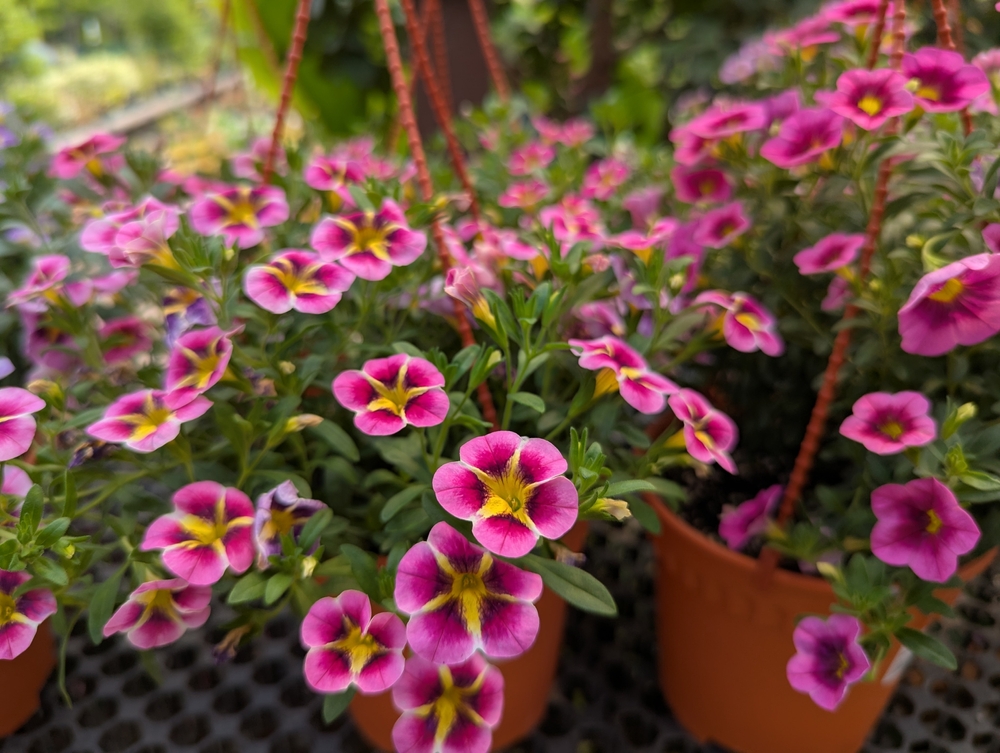
Calibrachoa plants bring long-lasting color to patios, hanging baskets, garden beds, and window boxes. Known for their small petunia-like blooms, these trailing flowers produce hundreds of blossoms throughout the growing season. Many gardeners also know them as “Million Bells” because of their abundant flowers and cascading growth habit.
Native to South America, calibrachoa originally grew in regions of Brazil, Argentina, Uruguay, and Paraguay. Botanists once classified the plant as a type of petunia because of its similar appearance, but later identified calibrachoa as its own genus in the Solanaceae family. Since becoming popular in home gardening during the 1990s, calibrachoa has become a favorite for colorful container gardens thanks to its fast growth, long blooming season, and low-maintenance nature.
This complete care guide covers everything you need to know about calibrachoa plant care, from watering and sunlight needs to container growing tips and common pests. Whether you are planting calibrachoa in your garden or decorating your porch with hanging baskets, proper care helps these flowers thrive from spring through fall.
What Is a Calibrachoa Plant?
Calibrachoa is a flowering plant native to South America. Although often confused with petunias, calibrachoa belongs to a separate genus. The plants produce small trumpet-shaped flowers in shades of purple, pink, yellow, red, white, orange, and blue. These annuals grow quickly and bloom continuously with the right conditions. Their trailing habit makes them especially popular for hanging baskets, raised containers, and border edges. According to the Proven Winners growing guide, calibrachoa performs best in warm weather with plenty of sunlight and consistent moisture.
Calibrachoa Plant Care Basics
Successful calibrachoa plant care starts with the right balance of sunlight, water, soil drainage, and fertilizer. These plants bloom heavily, so they need steady nutrients and proper growing conditions to stay healthy.
Calibrachoa Sunlight Needs
Calibrachoa plants grow best in full sun, so you should aim for at least six hours of direct sunlight each day. In especially hot climates, some afternoon shade helps prevent stress during peak summer heat, but too much shade often leads to fewer flowers and leggy stems.
Calibrachoa Soil Requirements
Well-draining soil is essential for healthy roots. Dense or soggy soil increases the risk of root rot and fungal problems. For garden beds, mix compost or organic matter into the soil before planting. For containers, choose a lightweight potting mix designed for flowering plants.
Calibrachoa Watering Schedule
Like with many plants, a major part of calibrachoa care involves proper watering. These plants like consistently moist soil but dislike standing water, so start by watering when the top inch of soil feels dry. During hot summer weather, hanging baskets and containers may need daily watering. Garden-grown calibrachoa usually requires less frequent watering because the soil retains moisture longer. It is important to avoid overwatering, especially in containers without proper drainage holes.
Calibrachoa Fertilizer Needs
Because calibrachoa blooms continuously, regular feeding supports healthy growth and flower production. Use a balanced liquid fertilizer every two weeks during the growing season. Slow-release fertilizers also work well when mixed into the soil at planting time. Yellow leaves sometimes signal nutrient deficiencies, especially iron deficiency. If leaves yellow while veins remain green, an iron-rich fertilizer often helps correct the issue.
How to Care for a Calibrachoa Plant Indoors and Outdoors
Many gardeners grow calibrachoa outdoors as annual bedding plants, though some bring containers indoors temporarily for decoration or protection during storms. When learning how to care for a calibrachoa plant, focus on airflow, drainage, and consistent sunlight exposure. Outdoors, avoid overcrowding plants because poor airflow increases the chance of mildew and fungal diseases. Indoors, place containers near a bright south-facing window for the strongest light exposure. Deadheading is usually unnecessary because calibrachoa naturally drops spent blooms. Still, trimming leggy stems throughout the season encourages fuller growth and additional flowering.
Calibrachoa Cut Flower Care
Although calibrachoa is most commonly grown in containers and garden beds, small cut stems sometimes appear in mixed floral arrangements. Proper flower handling helps extend vase life and preserve freshness. Start by trimming stems at an angle with clean floral scissors. Remove any leaves below the waterline to reduce bacteria buildup. Use cool, clean water and replace the water every two to three days. Keep arrangements away from direct sunlight, heating vents, and ripening fruit. Ethylene gas from fruit speeds up flower aging. If blooms begin to wilt, recut the stems and refresh the vase water immediately. Cooler room temperatures also help flowers last longer.
Caring for Calibrachoa Flowers in Gardens
Caring for calibrachoa plants in garden beds requires attention to planting location, spacing, and seasonal maintenance.
When to Plant Calibrachoa Flowers
Plant calibrachoa outdoors after the final frost date in spring. These flowers prefer warm temperatures and perform poorly in cold soil. Most gardeners plant calibrachoa in mid-to-late spring once nighttime temperatures remain consistently above 50°F.
Where to Plant Calibrachoa Flowers
It’s important to choose a location with full sun and excellent drainage. Raised beds and sloped areas work especially well because they prevent water from pooling around roots. Avoid planting calibrachoa in heavy clay soil unless you improve drainage with compost or soil amendments.
When to Water Calibrachoa Flowers
Garden-grown calibrachoa usually needs watering once or twice per week, depending on rainfall and temperature. It’s worth noting that hot weather increases water needs significantly. Water deeply at the base of the plant rather than overhead. Wet foliage increases the chance of mildew and fungal disease.
Common Pests and Diseases
Like many flowering annuals, calibrachoa attracts a few common garden pests. Aphids, spider mites, and whiteflies occasionally appear, especially during hot weather. Inspect leaves regularly for signs of insects or sticky residue. Neem oil or insecticidal soap often controls mild infestations. Root rot, powdery mildew, and fungal diseases typically result from poor drainage or overwatering. Proper spacing and airflow reduce disease risk. We recommend avoiding overly wet soil conditions to prevent root problems.
Complementary Plants
Calibrachoa pairs beautifully with many sun-loving annuals. Popular companion plants include:
- Petunias
- Verbena
- Sweet potato vine
- Lobelia
- Geraniums
- Bacopa
These combinations create colorful containers and layered garden displays with varied textures and trailing growth habits.
Growing Calibrachoa Flowers in Containers
Container gardening remains one of the most popular ways to grow calibrachoa. Their cascading blooms spill beautifully over basket edges, window boxes, and decorative pots. Growing calibrachoa in containers requires slightly more frequent watering and feeding because soil dries faster than garden beds. Choose containers with drainage holes to prevent soggy roots. Hanging baskets often dry especially quickly during summer, so monitor moisture daily during heat waves.
Best Container Types
Several container styles work well for calibrachoa plants:
- Hanging baskets for trailing displays
- Window planters for colorful curb appeal
- Clay pots for increased airflow around roots
- Resin or plastic containers for better moisture retention
- Raised planter boxes for patio gardens
Clay pots help prevent overwatering because they allow moisture to evaporate more quickly. Plastic and resin containers retain moisture longer, which helps during extremely hot weather.
Popular Calibrachoa Varieties
Calibrachoa comes in many colors and flower patterns. Some varieties feature solid blooms while others include stripes, speckles, or contrasting centers.
Popular calibrachoa varieties include:
Superbells: One of the most recognized calibrachoa series, Superbells produces vigorous trailing growth and heavy flowering throughout the season.
MiniFamous: These compact plants work well in smaller containers and mixed arrangements.
Cabaret Series: Known for early blooming and compact growth, Cabaret calibrachoa suits patios and small garden spaces.
Double Bloom Varieties: Double calibrachoa flowers resemble miniature roses with layered petals and fuller blooms.
Fun Facts About Calibrachoa Flowers
- Calibrachoa belongs to the Solanaceae family, which also includes tomatoes and petunias.
- The flowers attract hummingbirds and pollinators throughout the growing season.
- Calibrachoa blooms continuously from spring until frost with proper care.
- Most varieties self-clean, meaning old flowers fall off naturally without deadheading.
Final Thoughts on Calibrachoa Care
Learning how to care for a calibrachoa plant helps you enjoy vibrant blooms all season long. With enough sunlight, consistent watering, good drainage, and regular feeding, these colorful flowers thrive in gardens and containers alike. Whether you grow hanging baskets on a porch or plant a colorful flower bed, proper calibrachoa care helps plants stay healthy and bloom more. If you love flowering houseplants and outdoor greenery, The Bouqs Co. also offers beautiful plant delivery options for every season. For more plant care inspiration, explore Bouqs guides on caring for stromanthe plants and the sago palm plant care guide.
Shop All

