
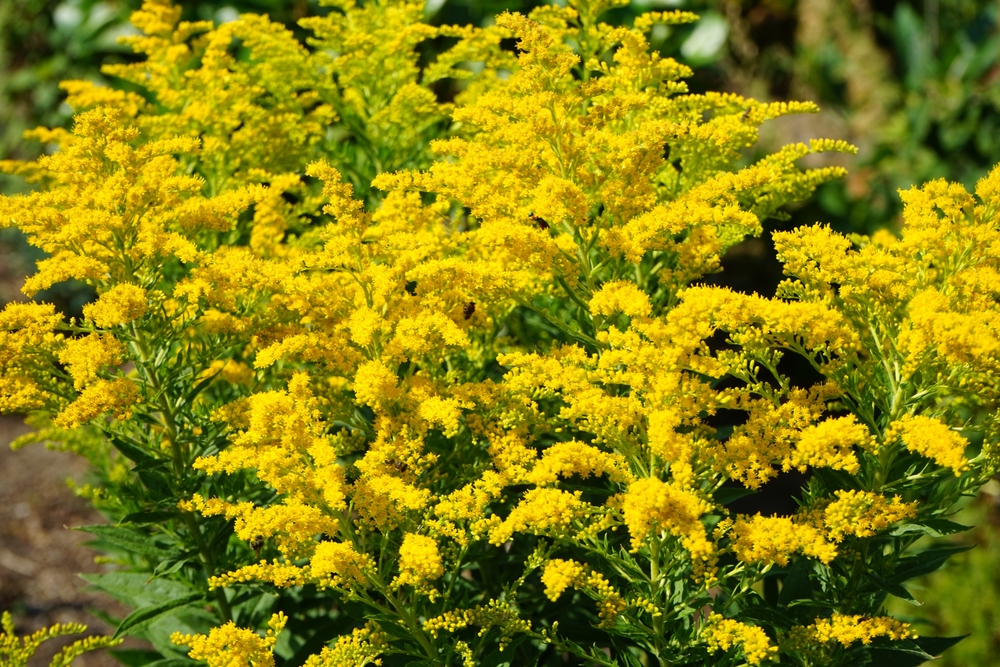
Golden blooms appear across Nebraska prairies in late summer and early fall. These bright clusters belong to solidago, commonly called goldenrod. The plant thrives across grasslands and open landscapes throughout the state. Because of its resilience and presence across Nebraska’s natural ecosystems, solidago became the official Nebraska state flower.
This guide explains the history of the plant, why Nebraska selected it as a symbol, and how gardeners grow goldenrod today. If you enjoy learning about floral symbols across the United States, you can also explore the full list of state flowers for more botanical history.
History of the Nebraska State Flower
The plant known as goldenrod belongs to the genus Solidago. Botanists recognize more than 100 species across North America. Many of these species grow naturally throughout the central United States, including the tallgrass prairies of Nebraska. Goldenrod spreads easily across open fields and prairie landscapes. Its tall stems produce clusters of bright yellow flowers, which attract bees, butterflies, and other pollinators. Because of this ecological role, goldenrod supports biodiversity in prairie habitats.
The Missouri Botanical Garden notes that solidago species thrive in open sunlight and tolerate dry conditions. These characteristics help the plant survive in prairie climates where rainfall varies from season to season. Goldenrod also played a role in early American herbal traditions. Indigenous communities used the plant in teas and topical preparations. Later, settlers used goldenrod in folk medicine and dye production. Due to its widespread presence across Nebraska landscapes, solidago became closely associated with the region’s natural identity.
When and Why Solidago Became the State Flower
The state flower of Nebraska became official in 1895. During the late nineteenth century, many U.S. states selected botanical emblems to represent local landscapes and agricultural heritage. Nebraska legislators chose goldenrod because the plant grows naturally across the state and reflects the character of prairie ecosystems. Its bright yellow flowers appear across fields and roadsides during late summer, creating large golden displays that many residents associate with the changing seasons.
The selection of solidago also reflected the state’s connection to agriculture and natural landscapes. Goldenrod thrives without intensive care, which symbolizes resilience and adaptability. Today, the Nebraska state flower continues to represent the state’s prairie environment and pollinator ecosystems.
Fun Facts About the Nebraska State Flower
Goldenrod carries several interesting characteristics that make it unique among wildflowers.
Goldenrod Often Gets Blamed for Allergies
Many people believe goldenrod causes seasonal allergies. Research from institutions such as U.S. Department of Agriculture shows that goldenrod pollen spreads through insects rather than wind. Ragweed, which blooms at the same time, causes most fall allergy symptoms.
Goldenrod Supports Pollinators
Goldenrod provides nectar for bees, butterflies, and other insects. Its late-season bloom period helps pollinators prepare for winter.
Types of Species of Solidago
More than 100 species exist across North America. Some grow under two feet tall while others reach heights of six feet or more.
Goldenrod Produces Vibrant Yellow Blooms
Most varieties produce bright yellow flowers. Some cultivated varieties display slightly deeper golden shades or lighter lemon tones. Goldenrod rarely appears in formal bouquets, but many people enjoy its color and wildflower appearance in rustic arrangements. If you prefer a similar warm color palette, you might enjoy arrangements where you can send sunflowers as a cheerful seasonal gift.
Growing and Caring for Solidago
Goldenrod grows easily in many gardens, particularly those designed to support native plants and pollinators. Learning how to grow solidago helps gardeners bring prairie beauty into their own landscapes.
Sunlight
Goldenrod grows best in full sun. Plants typically require at least six hours of direct sunlight each day.
Soil Conditions
Solidago adapts to many soil types, including sandy or clay soil. Well-drained soil encourages strong root development.
Water Needs
Once established, goldenrod tolerates drought conditions. Water young plants regularly during the first growing season until roots develop fully.
Growing Zones
Most species grow well in USDA hardiness zones 3 through 9. This wide range allows gardeners across much of the United States to grow the plant successfully.
Garden Benefits
Goldenrod supports pollinators and beneficial insects. Gardeners often plant it alongside other prairie plants such as coneflowers, asters, and ornamental grasses. Because goldenrod spreads easily through underground rhizomes, gardeners often place it in naturalized areas or pollinator gardens rather than small decorative beds.
Nebraska’s Floral Symbol Today
Goldenrod continues to represent Nebraska’s prairie heritage. Its ability to thrive in challenging conditions reflects the resilience of the state’s landscapes and communities. For those who enjoy exploring botanical traditions across the country, state flowers reveal how different regions celebrate their local ecosystems. You can also learn about the Delaware state flower to see how another state chose a plant connected to its agricultural history.
While goldenrod often grows wild across open landscapes, flowers remain a meaningful way to celebrate nature and share thoughtful gifts. Whether you admire wildflowers or cultivated arrangements, modern flower delivery services make it easier to bring beautiful blooms into homes and celebrations year-round. The enduring presence of solidago across prairies and roadsides ensures that the Nebraska state flower remains a lasting symbol of the state’s natural beauty.
Shop All

